Soup, Flu, and Post-Exertional Malaise
How to make Not-Quite-Chicken Soup when you’re flat out of spoons.
Just another Tuesday morning. Getting out of bed is just a little bit harder than usual.

That slight ache in my throat? The sore joints and muscles? The heaviness of my limbs? That brain-in-cloud feeling?
Clearly, I overdid it yesterday, riding my handbike to the hospital and back. Stupid, really. That was practically begging for post-exertional malaise (PEM).
What is Post-Exertional Malaise
Let’s take a step back and look at what post-exertional malaise is—and what it’s not.
Typically associated with ME/CFS (in fact, it’s one of its diagnostic criteria), post-exertional malaise is not the same as chronic fatigue. And, just to be crystal clear: chronic fatigue is not simply ‘being tired’.
Chronic Fatigue
Chronic fatigue is a debilitating tiredness that isn’t fixed by a good night’s sleep. It may or may not be triggered by exertion, and its main symptom is… well: fatigue, which may or may not be accompanied by brain fog.
As the word chronic implies: chronic fatigue is, indeed, chronic. It last basically forever. Months. Not hours. Not days or weeks. Months. Read that again: months.
And here’s the kicker: it’s quite common in quite a few chronic conditions. Not just ME/CFS. Here’s just few I can think off of the top of my head: Ehlers-Danlos Syndrome, Autism, Major Depression, COPD, Fibromyalgia, Lupus… and many more.
Post-Exertional Malaise
PEM is different. For one, it’s not chronic. (Well, not usually—though it does tend to become a frequent visitor.) And, it’s triggered by exertion, hence the ‘post-exertional’.
But doesn’t everyone get tired from exertion? Sure, but… this is different. Most people don’t crash from a simple bike ride, yoga class, or just reading a book. Also, tired doesn’t even begin to describe what PEM really is.
Not to mention, PEM often has a delayed onset: you don’t immediately crash. It can take anywhere from a couple of hours to a few days before the crash happens.
Here’s what post-exertional malaise looks like for me:
- sore throat
- sore joints and muscles
- a heavy feeling in arms and legs
- brain fog
- feeling feverish (without actually running a fever)
PEM, Flu, or Tuesday?
So, when I wake up on a Tuesday morning with exactly these symptoms—the day after a relatively relaxed bike ride to the hospital—what am I supposed to think?
Of course it’s ‘just’ PEM.
Of course, I just need a few days in bed and I’ll be back to normal again. My normal, that is.
Just another Tuesday.
Except that on Wednesday I woke up with my brain leaking out of my eyes and nostrils…
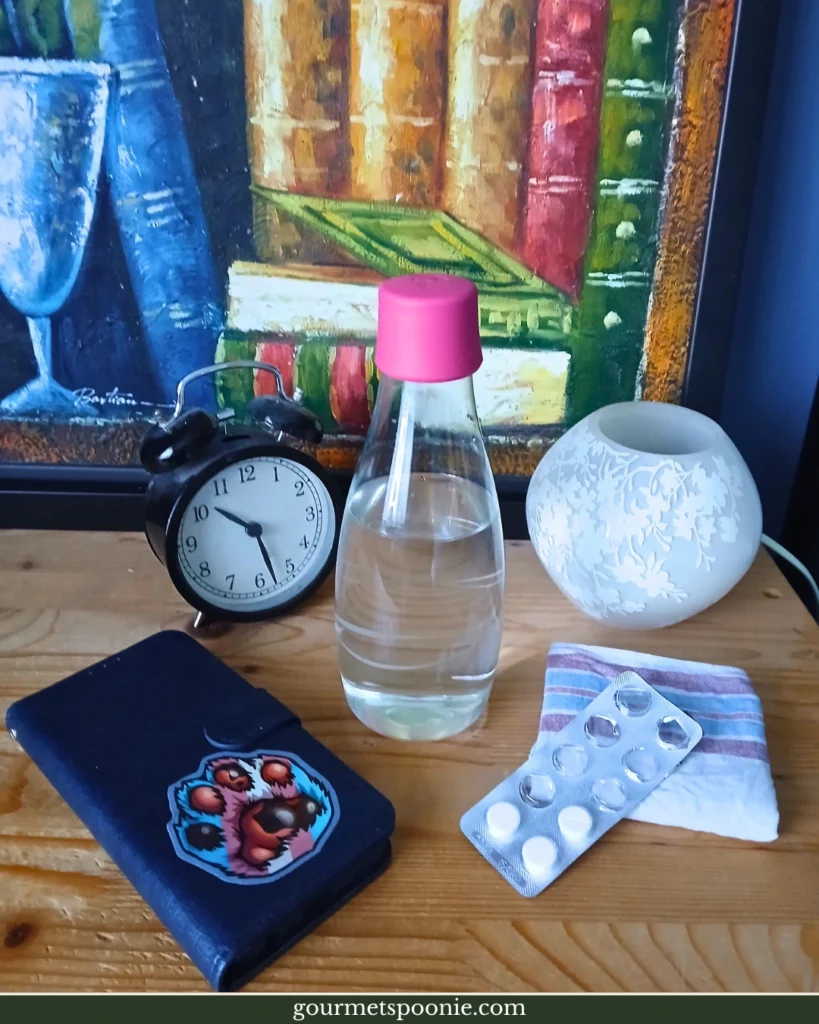
Turns out my PEM was the flu in disguise. Or maybe COVID. Took me ten full days, five of which spent in horizontal position, to just being functional again.
Lesson Learnt?
Distinguishing post-exertional malaise from the flu, COVID, or even the common cold, is not as straightforward as it might seem. There’s quite a bit of overlap.
What first looks like PEM, might actually turn out to be a viral infection. Or the other way round. The only way to be (almost) 100% sure? Testing.
Did I take a test? Absolutely not. I live alone. As long as I simply stayed at home (which wasn’t hard at all, seeing that I could barely even leave my bed) and didn’t invite anyone over, there was zero risk of me infecting others.
And with a sub-zero appetite and a pantry full of food, I wasn’t about to starve anytime soon.
Not-Quite-Chicken Soup to the Rescue
The other day I posted a Note to my Substack. One that struck a chord with many of my readers.
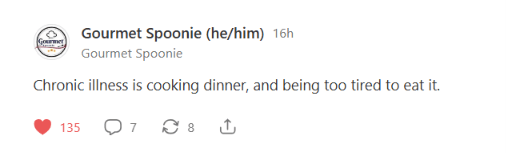
‘Chronic illness is cooking dinner, and being too tired to eat it.’
Fatigue, PEM, flu, or even just plain old ordinary tiredness do that to me—and to many other chronic folks, it seems.
Unfortunately, not eating will not help a sick person recover. No matter what ails us, we still need to eat. And, apparently, the flu made me crave chicken soup.
One problem: I’m a vegetarian. No chicken-anything in my pantry. A quick grocery-shop was out of the question. Even if I’d had the energy (which I didn’t) I was contagious. Which also meant I couldn’t ask a friend or neighbour to buy me a jar of chicken broth.
So I improvised and made Not-Quite-Chicken Soup:
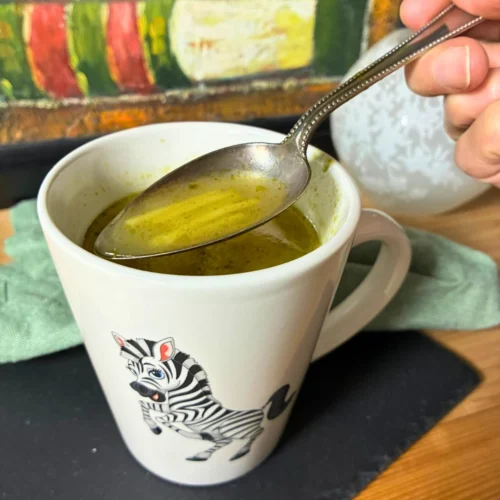
Not-Quite-Chicken Soup
Ingredients
- 1 bouillon cube vegan
- 500 ml boiling water
- 1 handful gluten-free spaghetti broken
Instructions
- Disolve 1 bouillon cube in 500 ml boiling water
- Add 1 handful gluten-free spaghetti
- Simmer for 10 minutes.
- Pour into mug.
- Enjoy!
Perfection!
Looking for more spoonie-friendly soup recipes? I’ve got you covered:


Disclaimer: I am no healthcare professional. The information provided in this blog post is based on personal experience and understanding, and while I always aim to be as accurate as possible, mistakes happen. The information in this blog post is not intended as medical advice. If you have any health concerns, please consult a qualified healthcare professional.
Want more Spoonie-friendly home and lifestyle tips?
Sign up for the newsletter and get practical tips and ideas delivered straight to your inbox.
AI Statement: I don’t use generative AI: all my posts are 100% human written. I develop and test all recipes in my own kitchen. All photography and editing done by me.