What My Kitchen Looks Like After a Recipe Photoshoot (Behind the Scenes Reality)
Spoonie, recipe developer, food photographer, writer… quite a mouthful, right? Ever wondered what it really looks like wearing all those hats at the same time? Here’s your chance. Come into my kitchen and take a peek at my recipe photoshoot behind-the-scenes.
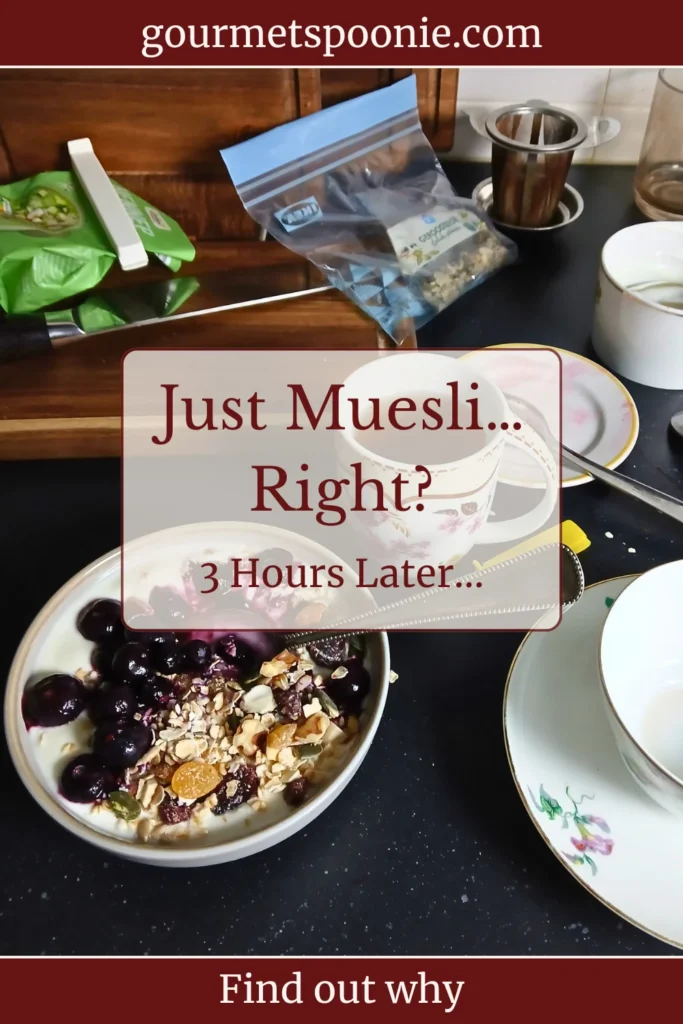
It had been quite a day. I just finished another photo shoot. An easy one—on paper. Just muesli. No real cooking. Just an assemble-style-shoot session.
Exactly the kind of thing that should be quick and straightforward.
And yet… the entire shoot gobbled up 3 hours, and all my spoons for the day.
What Goes Into a ‘Simple’ Recipe Photoshoot
Three hours. Half a million spoons.
But why? Doesn’t throwing a bowl of muesli together take mere minutes? And no effort at all?
What does a recipe photoshoot actually involve?
See, that’s the difference between preparing a quick breakfast and doing a photoshoot. While there was no cooking involved, I did need to prepare a new batch of muesli first.
- Gather ingredients
- Chop up some nuts
- Throw all ingredients in a bowl and mix together
- Transfer into airtight container
Next, I had to set the scene:
- A bowl of yoghurt with muesli and pomegranate seeds at a neatly styled breakfast table.
- A bowl of yoghurt with muesli and blackberries on a rustic breakfast table.
- Some make-ahead options: muesli parfaits in glass jars
Each variation required a different setup with different props: bowls, jars, cups, spoons, and more. Photos taken from several different angles. It all adds up.
And that’s just the beginning.
Why Food Photography Takes Longer Than You Think
A photoshoot is not just one bowl of muesli for breakfast. We’re looking at:
- Two bowls, two cups, several spoons, three jars, a small bottle of plant milk (decanted from a carton)
- Styling the ingredients so the food looks so delicious you’ll want to take a spoonful right now
- Subtle (and sometimes not-so-subtle) repositioning of props to ensure the composition works
How many photos does it take to get one good shot?
You don’t just take one photo. You take a photo, check your screen and see that it doesn’t quite work, so you tweak things a little, and take another photo. And another, and…
There’s so much more that goes into a recipe photoshoot behind the scenes than you’d imagine… It’s work. Actual hard work.
But also, very stimulating and fulfilling work. Because there’s nothing quite like creating something and seeing how it all comes together.
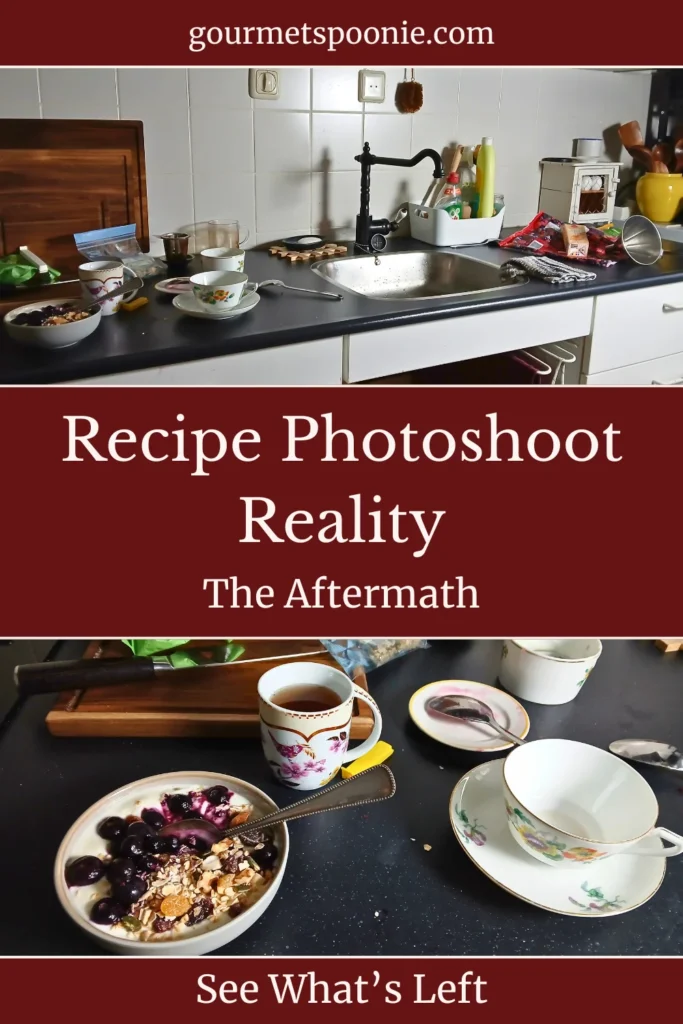
What My Kitchen Looks Like After a Recipe Photoshoot
So the photoshoot is done. But that doesn’t mean the work is over. Because now the kitchen is waiting. Again.
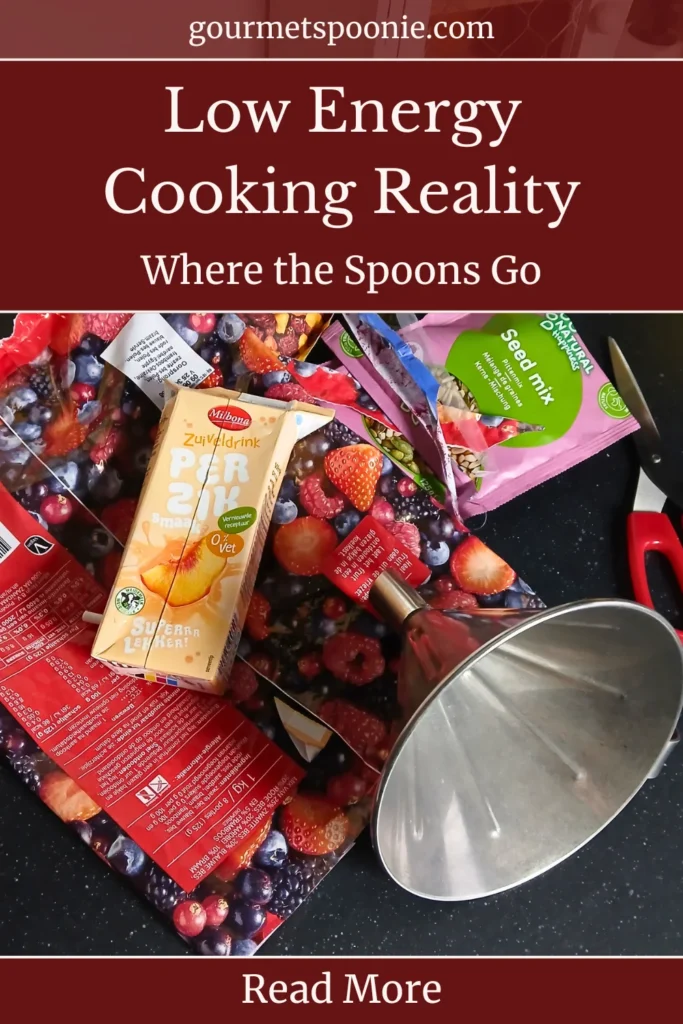
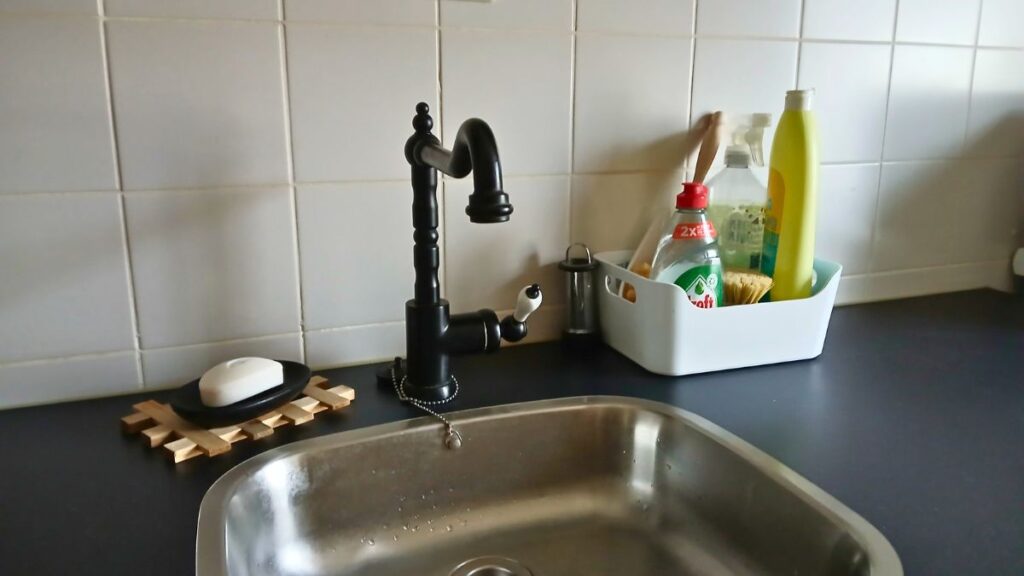
There’s empty packaging on the worktop. A pair of scissors. A funnel, used to decant the plant milk. An empty package of the drink I quickly gulped down somewhere during the photo shoot. The cloth I used to wipe up spills.
On the other worktop are cups and saucers, spoons, bowls, the cutting board and knife. A few bags with what remained of the seeds. But it could have been worse. I did some quick spot cleaning during the photo shoot itself.
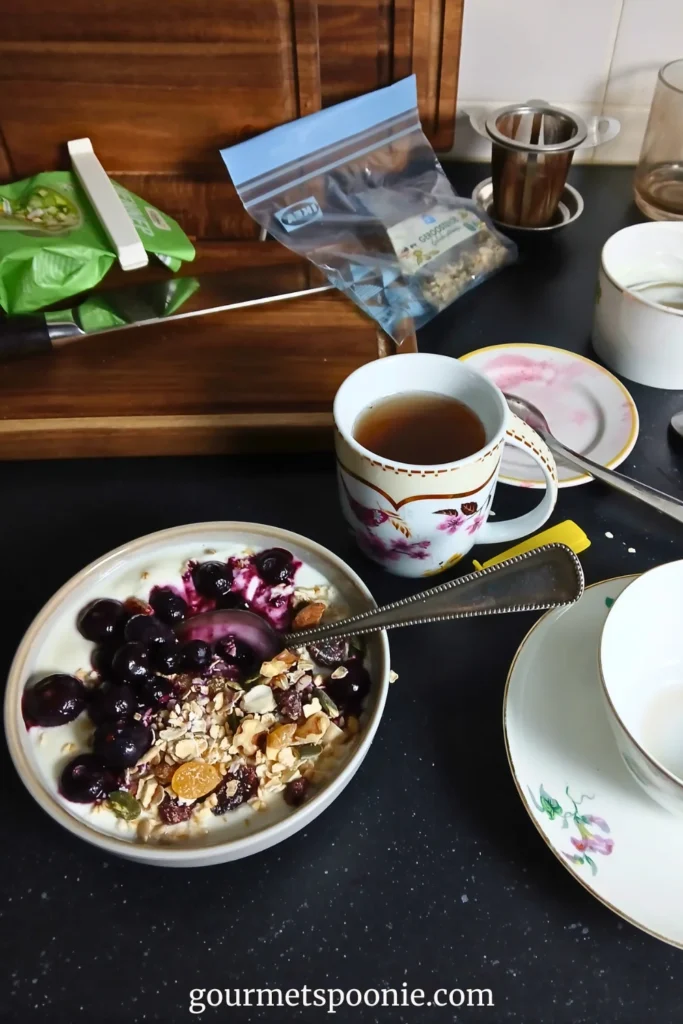
Bonus: there’s that one bowl of yoghurt and muesli, and it’s past supper time, so I’ll have that and call it a day.
The Hidden Work Behind Recipe Development and Food Photography
Those photos you see? The final dish, the calm, styled images?
They’re the result of many hours of work. First comes the recipe development. Next the testing. Refining. Testing again. More refinements.
Only once that’s all done can I start writing the recipe and the accompanying blog post. Then, when that’s done, comes the final touch: the photoshoot. All those little tasks, repeated ad nauseam.
Oh and let’s not forget about the photo studio. Because that’s where I take most of my photos: in my fold-away hallway studio. I need to set that up every time I do a photoshoot. The table, the lights, the tripods, the backdrops.
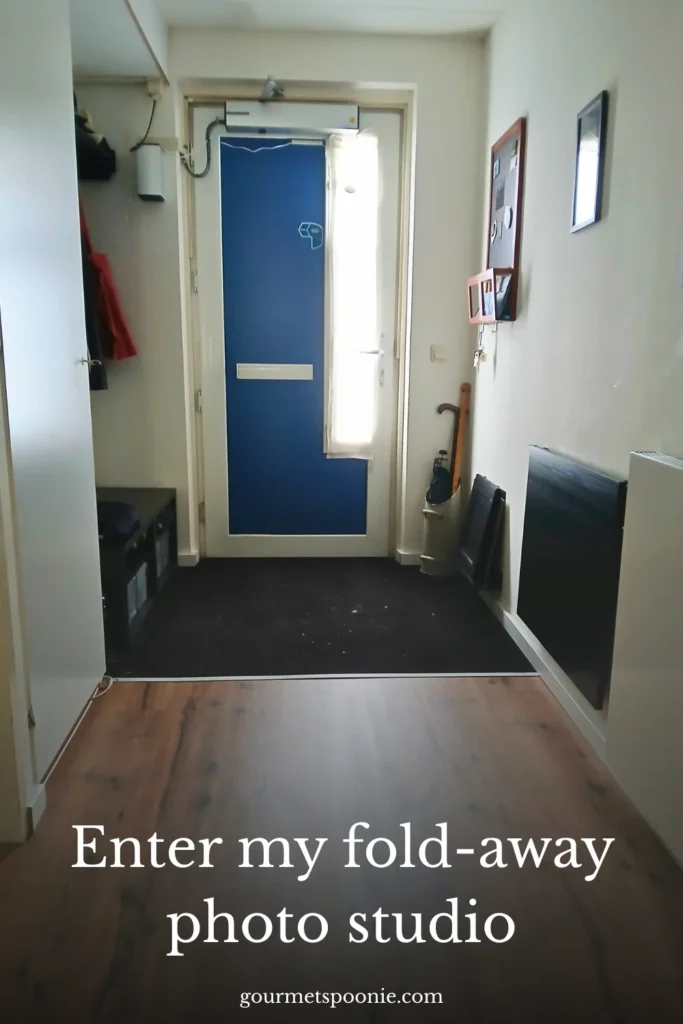
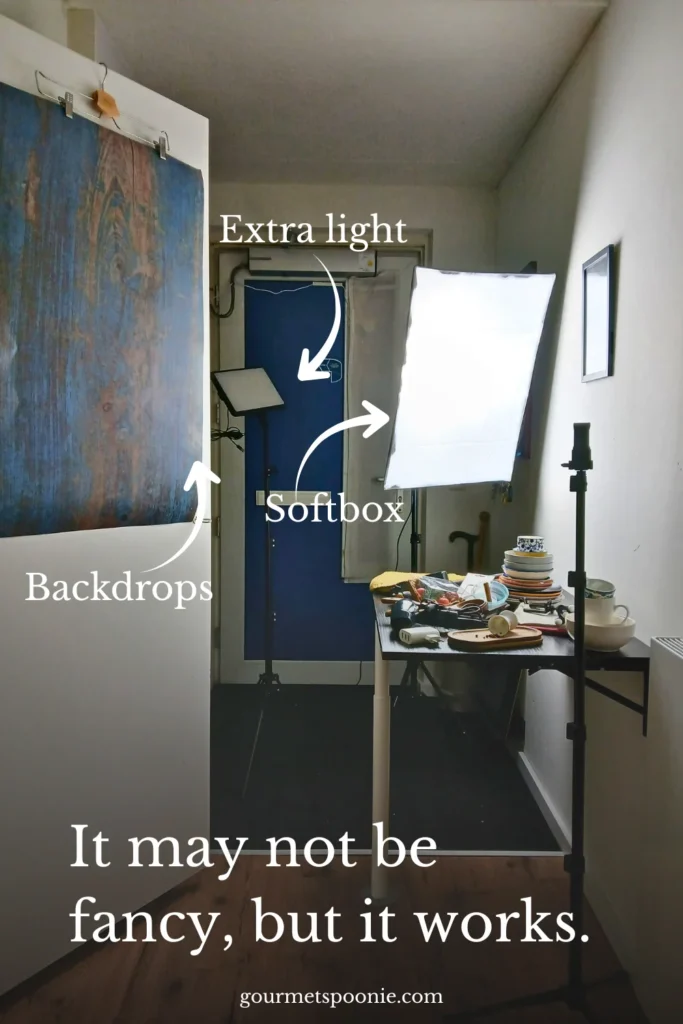
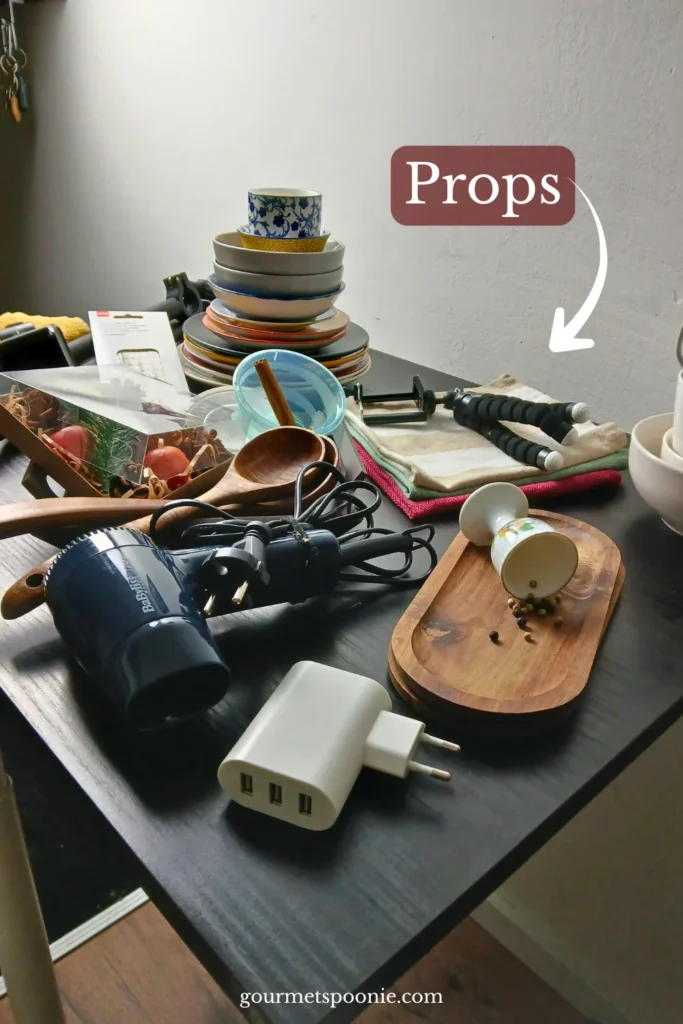
And, while I still take all my photos with my phone (even though I have a perfectly good Canon EOS 2000D) I do wipe my lenses before taking even a single picture.
All of that just goes to show: developing recipes is nothing like everyday cooking, and food photography involves far more than just taking a snapshot of the food on your table.
Cooking and Food Photography with Limited Energy
But doesn’t every recipe developer run into the same issues?
Maybe. Maybe not. Some may not need a photo studio and only shoot with natural light. I don’t have that option. Some may have an entire team behind them. I work solo.
But the biggest difference, I daresay, is that I’m a Spoonie.
Why is cooking more exhausting with chronic illness?
My already limited energy isn’t spent on cooking alone. It’s the setup, the transitions, the inevitable interruptions, the pain that’s always there, the effort of keeping my body upright and my joints properly aligned.
And then, when all is finally done, there’s still the cleanup. That’s often the hardest part. Because once I get to that stage, I’m already spent.
After the Photoshoot (When There’s No Energy Left)
That’s why sometimes (OK, make that pretty much always) I don’t clean. Not immediately.
While I hate the mess and truly need a clean and clutter-free kitchen, I don’t really have a choice.
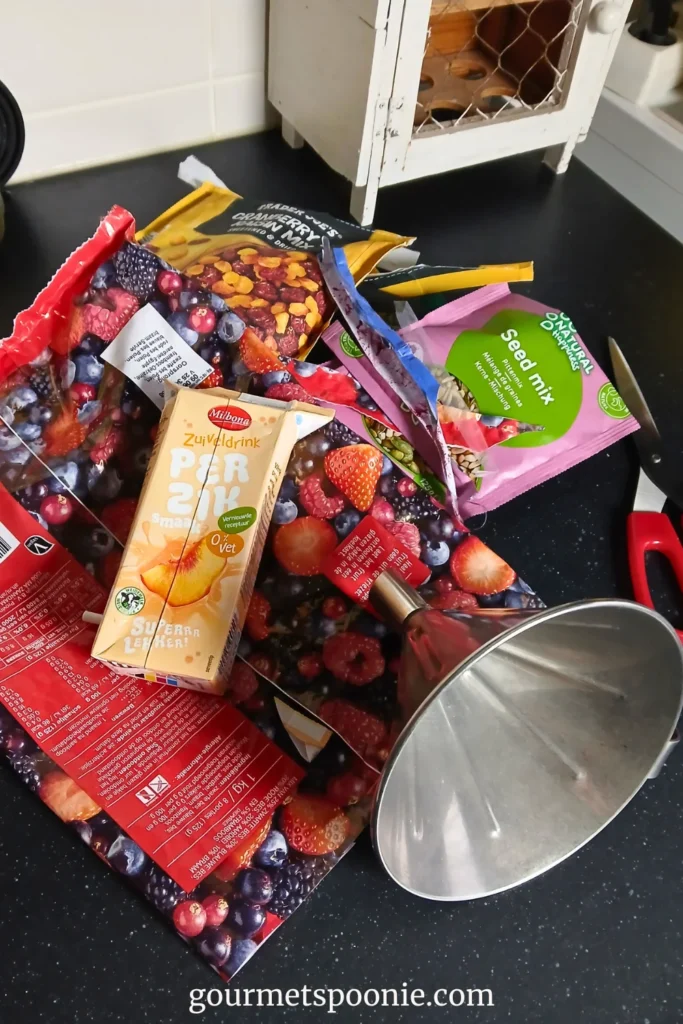
When my body says no, I can’t magically make it say yes. It’s that simple. What I need after a photo shoot is rest. A nap on the couch, with my cats. Soft music playing in the background. That’s how I replenish my spoons.
The Mess Is Part of the Process
The messy photoshoot aftermath is proof of several hours of creation. Proof that, even though I’m chronically ill and disabled, I’m still thriving. On my own terms, and at my own pace.
That’s worth the mess in my kitchen. Worth burning through an entire bucket of spoons in just a few hours.
That’s what makes me come back for more. Time and again.
Because I love creating, and I love helping other Spoonies take back the kitchen.
That’s my why.
And the cleaning?
That can wait.
FAQ
More than you’d expect. Even a simple recipe can require multiple bowls, spoons, jars, and props for different setups. Each variation adds more tools, which quickly builds up.
Much longer than just cooking. It involves testing, refining, writing, and photographing. The photoshoot alone can take several hours.
The spoon theory describes limited daily energy. Each task uses a ‘spoon’, and once they’re gone, you’re done for the day. Cooking and photoshoots can use several at once.
No. It involves recipe development, testing, food photography, and writing. The final images hide a lot of work.
Want more Spoonie-friendly recipes and kitchen tips?
Sign up for the newsletter and get them delivered straight to your inbox.
Enjoyed this Post? Pin it!