Easy Vegan Dutch Pancakes – Gluten-Free & Spoonie-Friendly
Vegan | GF | Soy-free | Nut-free | No rice
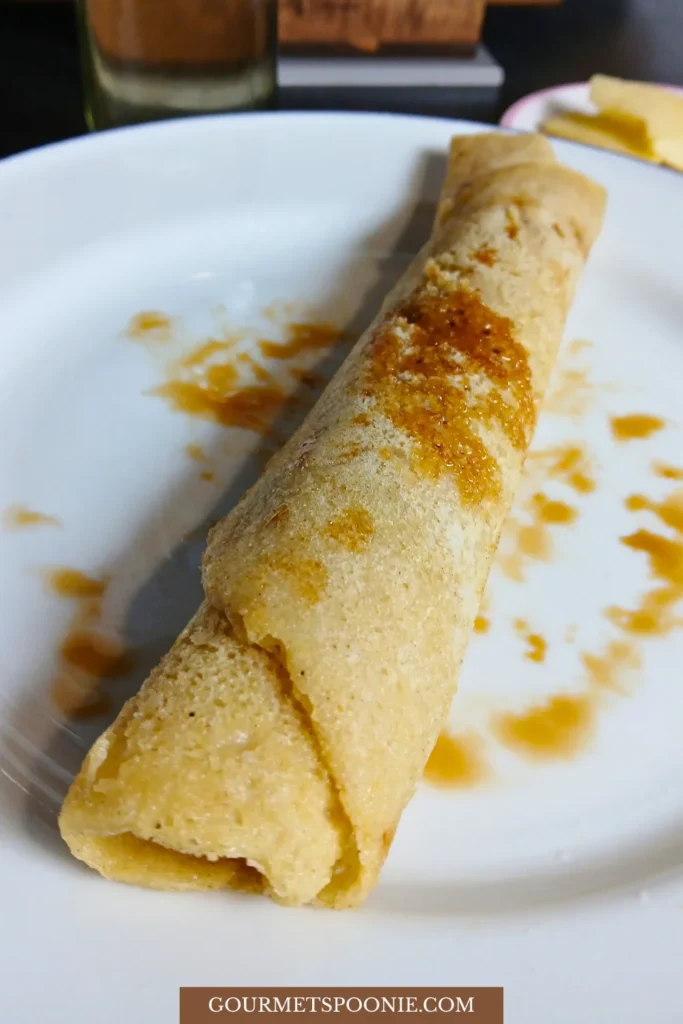
Soft and pliable, these gluten-free vegan Dutch pancakes are so satisfying you’ll never even notice there’s no dairy or eggs in them.
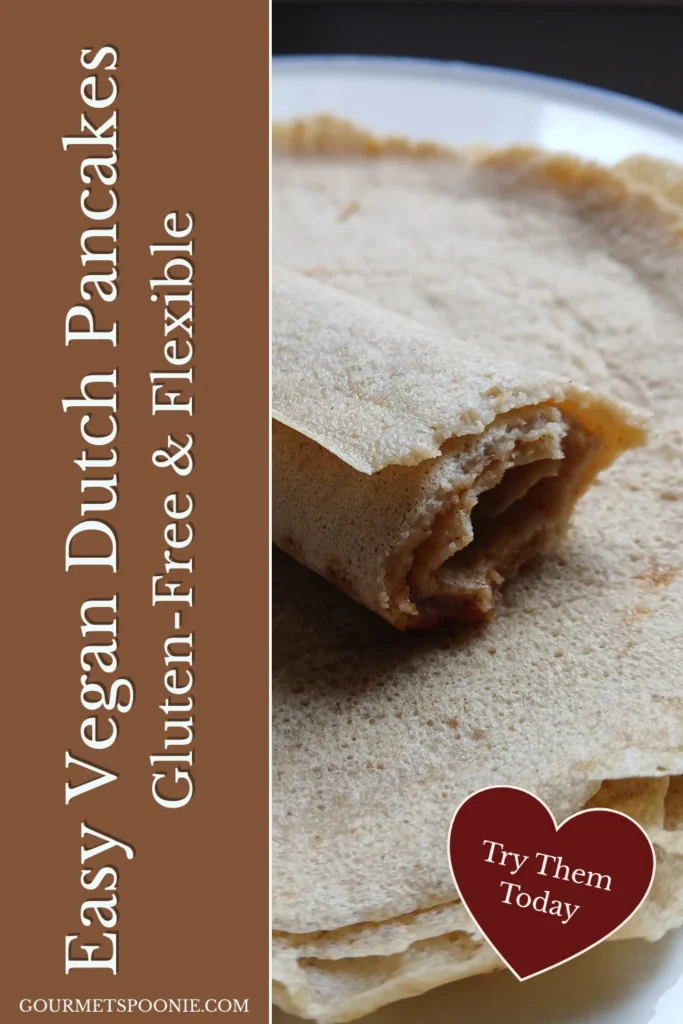
Unlike American pancakes, they’re thin and easy to roll—and delicious with both sweet and savoury toppings.
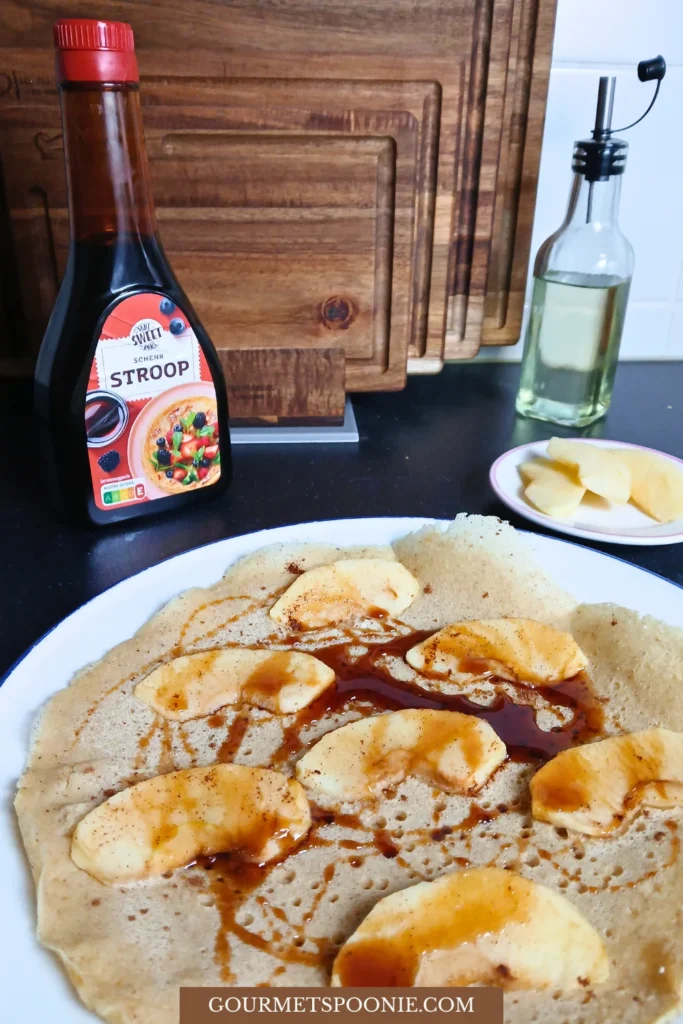
Growing up in the Netherlands, pannenkoeken (Dutch pancakes) were a real treat. My mum would make them for birthdays, and sometimes also on Wednesday afternoons. When on holiday, my parents or grandparents might even take us out to dinner at a pannenkoekenrestuarant: a child-friendly, relaxed place that served many varieties of pancakes and also poffertjes—which are basically thick, fluffy pancakes the size of a large coin.
Even today, Dutch pancakes are high on my favourite foods list.
Why You’ll Love These Gluten-Free Dutch Pancakes
I’ll admit it, making pancakes does take some effort. Not because it’s hard (it isn’t) but because it takes time. Active cooking time spent at the stove, watching.
But if you have the spoons, it’s 100% worth the effort.
Tip: Grab a kitchen stool. Standing is optional.
These pancakes are delicious—and you need just a handful of pantry staples to make them. No dairy, no eggs, no gluten… but they hold together beautifully and roll up like any proper Dutch pancake should. And, unlike many gluten-free pancakes, these are actually filling enough to keep you going.
Spoonie Tips
- Standing at the hob is optional: just sit on a high stool. (That’s what I did before I had my wheelchair. It really makes a difference.)
- Back when I had a family with two hungry teens to feed, I’d use two pans to speed up the process. And while it’s twice as fast, it’s easily four times as exhausting that way. Do not recommend.
- Cast-iron pans are awesome. They’re also heavy. There’s zero shame in using a lightweight non-stick frying pan. Fed beats hungry. Every single time.
- The first pancake often fails, so don’t worry if that happens to you. The secret to a perfect first pancake: a very hot pan.
Ingredients for Gluten-Free Dutch Pancakes
Traditional Dutch pannenkoeken are made with wheat flour, dairy milk, and eggs, and fried in butter. My version uses my own gluten-free flour blend, non-dairy milk, baking powder, and a neutral cooking oil instead.
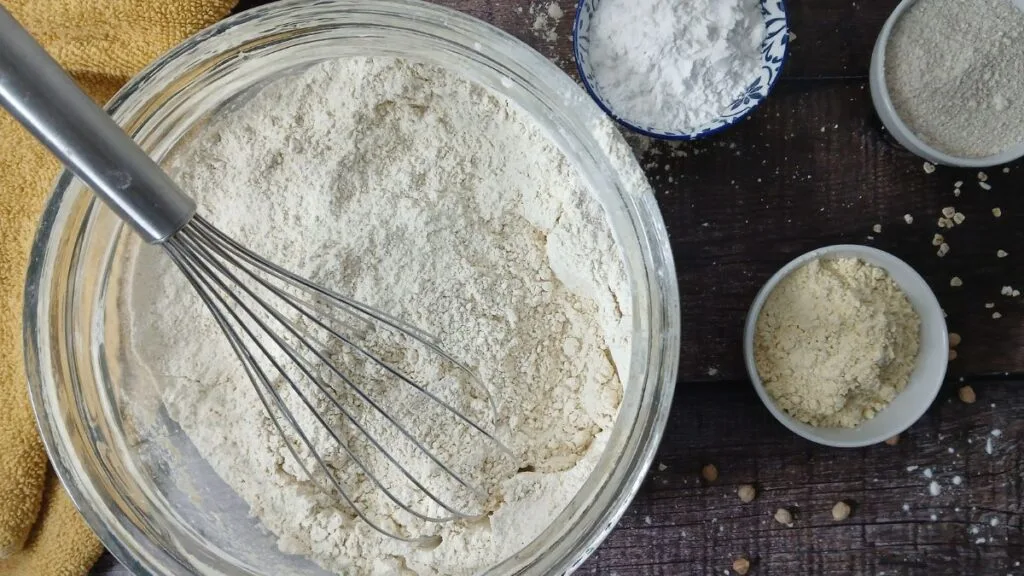
While you can use any gluten-free flout blend you trust, for best results, I recommend using my high protein gluten-free flour blend—and your preferred non-dairy milk. That said, I prefer soy milk for these pancakes, because it behaves more like dairy milk than, e.g. almond milk or oat milk.
Also, please note that I’ve only tested this recipe with my own flour blend, so you may have to adjust quantities depending on how thick your batter turns out.
How To Make Vegan Dutch Pancakes
High-Protein Vegan Dutch Pancakes
Equipment
- 1 Mixing bowl
- 1 Fork or immersion blender
- 1 Frying pan
- 1 Thin spatula for turning the pancakes
Ingredients
- 1 cup flour blend gluten free
- ¼ tsp baking powder gluten-free
- 1¼ cup non dairy milk
- cinnamon or cardamom optional
- neutral cooking oil
Instructions
- Mix all dry ingredients in a large bowl.
- Add milk and mix with a fork or stick blender.
- Allow the batter to rest for 10-15 minutes. (Do not skip this step!)
- Add more water or milk if the batter is too thick. (The batter should be pourable; just a bit thicker heavy cream).
- Heat cooking oil in a frying pan.
- Pour some batter in the pan and swirl around until the bottom of the pan is covered.
- Bake until the top is dry and the bottom golden.
- Turn, and bake until the other side is golden as well.
- Remove from the pan and place on a large plate.
- Continue baking until you’ve no batter left.
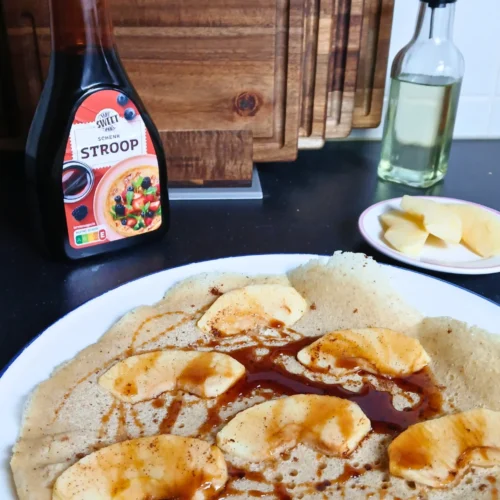
- Serve with dark treacle, golden syrup, jam, or powdered sugar.
Notes
- It’s very important to let the batter rest immediately after mixing it. It will thicken as the flour absorbs the liquid. Adding extra liquid after resting gives you full control over the final consistency of the batter.
- To prevent your first pancake from sticking to the bottom and failing, make sure the pan is really, really hot.
Sweet and Savoury Pancake Variations
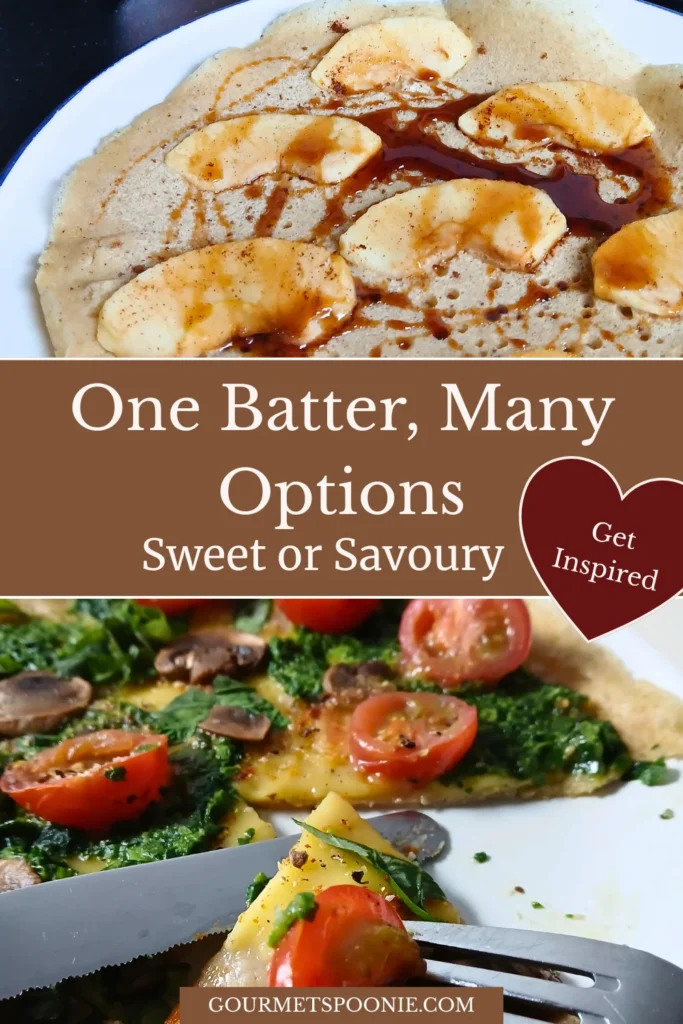
While traditional Dutch pannenkoeken are delicious with a sweet topping, I think they’re even better savoury. Every pannenkoekenrestaurant has lots and lots of variations to choose from, and they’re all trying to outdo each other when it comes to variety.
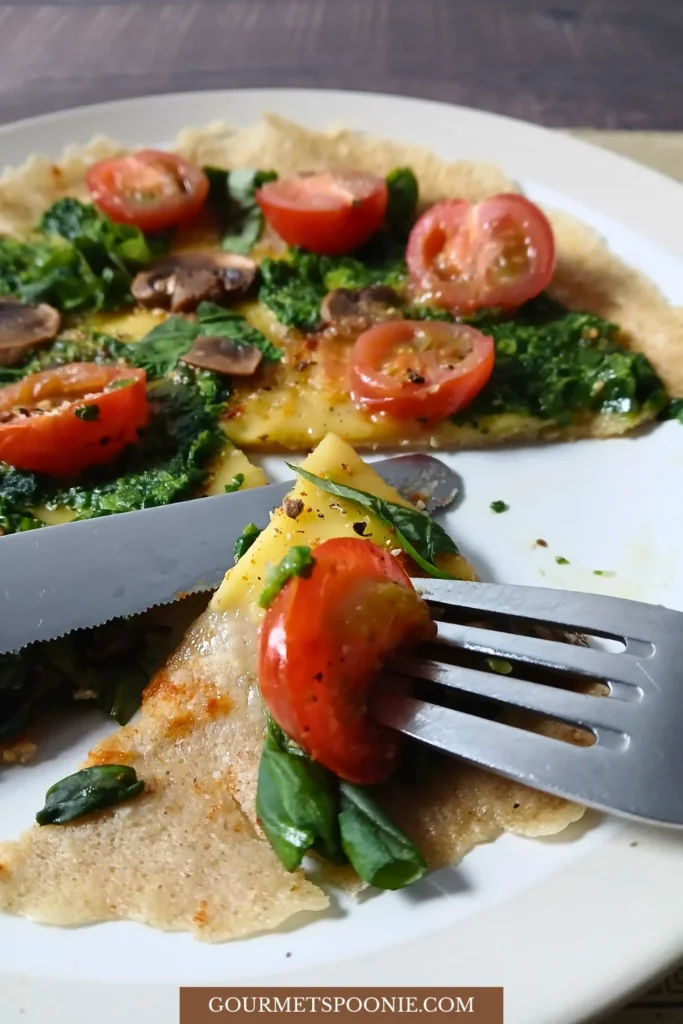
Because listing all these variations is impossible, I’ll just share a few of my personal favourites here.
Chef’s note: don’t turn these pancakes. Instead cover the pan with a lid and cook on low. This takes a bit of time, but the result is worth it. Pinky promise.
- Pizza Pancake: add vegan cheese (one that melts well) and pizza fillings of your choice to the pancake immediately after pouring the batter in the pan. Cover the pan with a lid and cook on low heat until the cheese has melted and the bottom of your pancake is golden.
- Pancake Hawaii: traditionally this pancake is topped with ham, cheese, and pineapple. My favourite variation is a pescetarian one, using salmon instead of ham. Add toppings as soon as the batter is in the pan, then cover and cook on low until done. To veganise this pancake, simply add a gluten-free vegan salmon substitute last minute.
- Rustic Forest Pancake: with mushrooms, leeks, walnut (omit when you’re allergic), and plant-based feta. Again, just add the toppings immediately after pouring the batter into the pan, cover with a lid, and cook on low heat.
- Orchard Dessert Pancake: top the pancake with peach slices as soon as the batter is in the pan. Cover and cook on low until done. Slide onto a plate, and add a scoop of vanilla ice-cream and a drizzle or maple syrup.
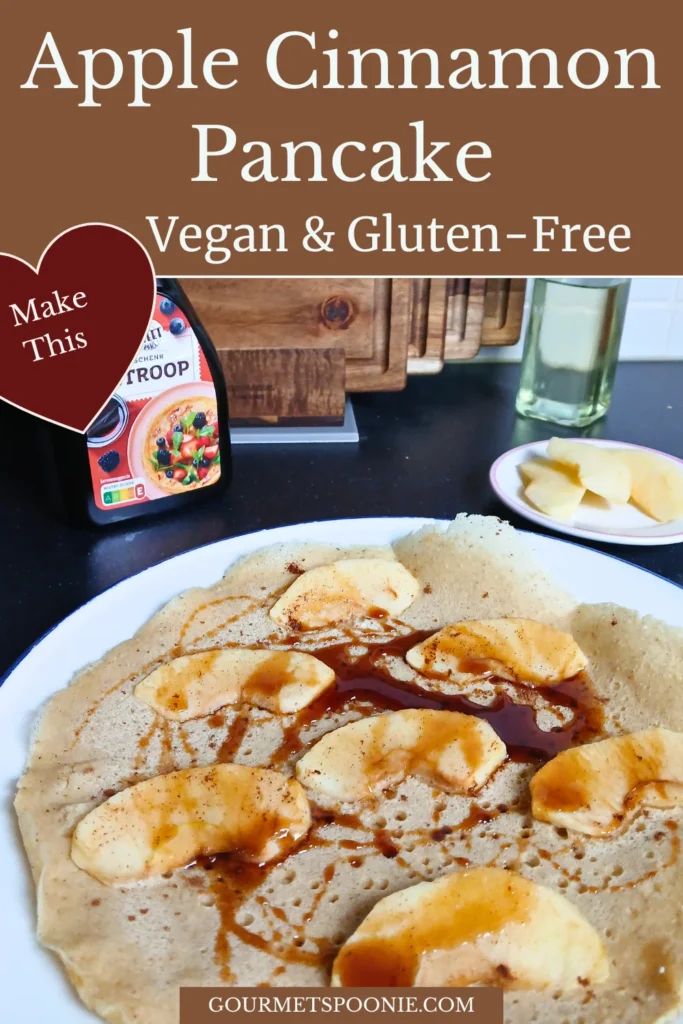
- Traditional Apple Pancake: top your pancake with apple slices (maybe add a handful of raisins), and sprinkle with cinnamon. Cover, cook on low until done. If you want to go really fancy, you can first soak your raisins in rum, and serve your apple pancake with a nice dollop of squirty cream.
How To Store Dutch Pancakes
Honestly, we don’t usually store our pancakes. However, if you do end up with leftovers, you can store them covered in the fridge for up to 2 days. You can eat them cold, reheat in the microwave, or even in a pan.
That said, most Dutch supermarkets sell ready-made Dutch pancakes, which you can store in the fridge and either eat cold, or heat up in the microwave.
Or… you can make the batter ahead and store in the fridge for one or two days. I do this all the time: mix more batter than I need, make one or two pancakes to eat immediately, and keep the leftover batter in the fridge for a couple of days.
Allergy Information
Free from: Dairy, Gluten, Eggs, Nuts, Soy (depending on your choice of dairy-free milk), Sesame
Important: Always check labels for cross-contamination risks.
Disclaimer
I’m not a dietitian; this recipe and any nutritional or allergy-related notes are based on personal experience and should not replace professional advice.
If you like this recipe, you might also enjoy my gluten-free banana bread recipe, or potato salad using fridge leftovers.
Frequently Asked Questions
Your batter should be just a bit thicker than heavy cream. It should still be pourable and just thick enough to spread easily when you tilt the pan.
Gluten-free flour blends behave differently from wheat flour: they absorb more liquid, which means gluten-free batters take more time to ‘set’. After resting the batter, you can better judge how much liquid you should add to get the right consistency.
This is usually a direct result of the pan not being hot enough. Impatience also comes into play here: if you try to flip the pancake too soon, it may still stick to the bottom, even if the pan is hot enough.
Two things are important here: the first is to make sure your pan is hot enough. The second is patience. The pancake needs to be dry on top, and when you lift a corner with a spatula, the bottom should be lightly golden.
Chef’s tip: shake the pan if you think you’re ready to flip. If the pancake slides freely across the bottom of your pan, you can safely turn it.
Want more simple, comforting recipes that work on low-energy days?
Sign up for the newsletter and get Spoonie-friendly recipes and kitchen tips straight to your inbox.
Like this Recipe? Pin it!