Adaptive Kitchen Tools I Actually Use Every Day
Younger me never expected I’d be needing adaptive kitchen tools in my forties, yet here I was. Chronically ill, wheelchair-dependent and using exactly the kind of kitchen aids not even my grandmother would have used.
There’s nothing remotely cool about using adaptive cooking tools, especially when you’re still young, physically active, and parenting teens. But money was tight, so ordering take-away daily was no option, and my spouse’s cooking skills basically stopped at opening tins, jars, and packets and reheating food.
Small Adaptive Kitchen Aids
Cooking with hEDS can be a right pain in the… hands. And, trust me, it has nothing to do with strength. But when your fingers dislocate when you’re only trying to open a jar… well, that’s frustrating, to say the least.
That’s where these little helpers come in.
Rubber jar grippers
No, not the fancy ones that cost an arm and a leg. I’m cheap, remember? So I needed a solution that wouldn’t break the bank.
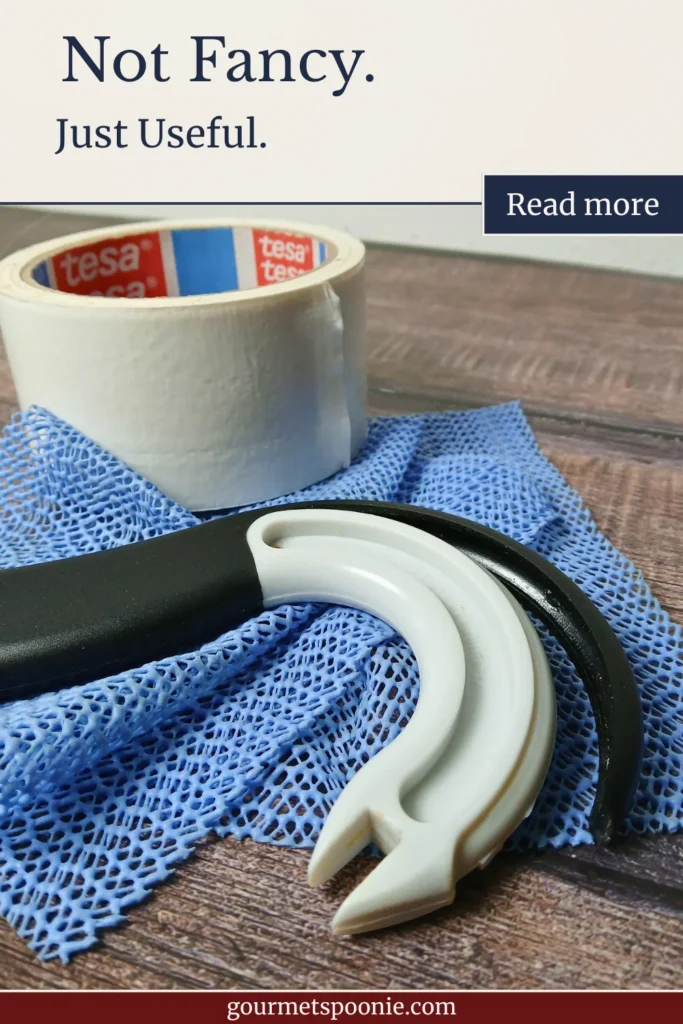
Enter a roll of rubber shelf liner I still had lying around. Cut two squares out of it and done. That was about fifteen years ago, and I still have them. Use them all the time—though by now, they’re practically falling apart.
But they still serve me.
Ring & Pull Can Opener
Whoever thought it was a good idea to ‘improve’ tins by adding ring pulls was an idiot. Those things are murder on my hypermobile fingers. And seeing that my cats are spoilt-rotten balls of fluff who love their tinned meat…
Add to that the occasional tin of food for hungry humans…That’s a lot of those dratted ring pulls I have to conquer almost daily.
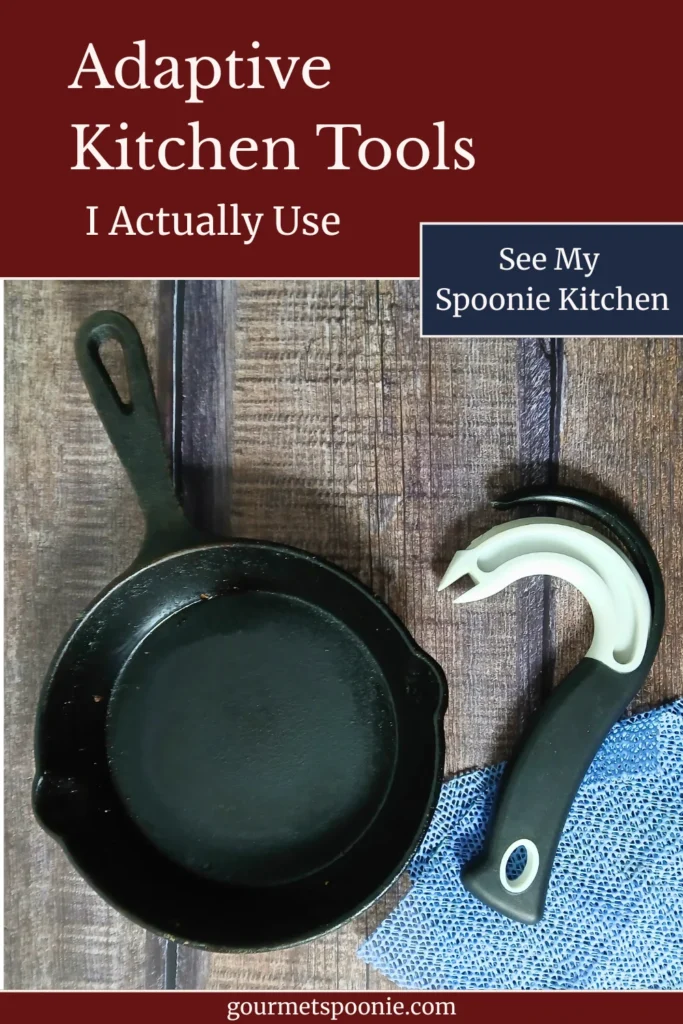
Thankfully, I have my trusty ring & pull can opener, which makes light work of them. I’ve had this small tool in my Spoonie kitchen for almost as long as my rubber jar grippers, and it shows. It’s quite literally coming apart, but it still works as intended, so I’m not replacing it yet.
If anything, I might just go ahead and mend it with duct tape. Get a couple more years of use out of it.
Essential Appliances In My Spoonie Kitchen
As you’ll have guessed by now, I don’t like discarding items—no matter how small or cheap. Yet, in an accessible cooking setup, sometimes we really have no other choice. Unfortunately, the kitchen tools worth replacing aren’t always the most affordable.
These are the ones I’ve had to replace—and far sooner than I liked or even anticipated.
Slow cooker
There’s no denying it: I love my slow cooker. The Crock Pot is a Spoonie’s best friend. I use mine all the time.
My first slow cooker died an unglamorous death after almost a decade of intensive use, so I suppose I shouldn’t complain. It’s probably the best I could have hoped for, yet I was still quite out of sorts when my trusty slow cooker croaked.
I only hesitated for just long enough to verify that there was no way I could salvage the thing before buying a replacement.
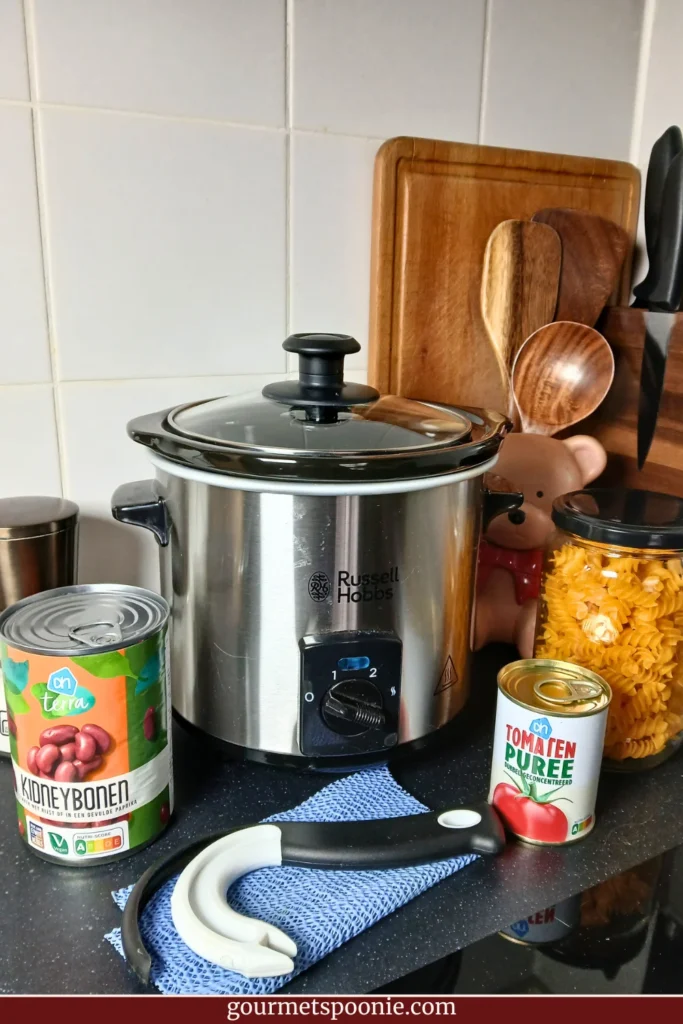
By now, I actually have two slow cookers: I bought a mini slow cooker, which happens to be the perfect size for just one or two meals. And it’s so much easier to clean than its larger sibling. It’s by far my favourite slow cooker.
Regrets? None!
Microwave
I never liked microwaves. Thought they were inferior appliances for lazy cooks. These days, I know better than that.
I bought my first microwave during the first year of the Covid pandemic. (Yes, it really took me that long.) Even then, I still got the most basic model I could find, an Ikea Tilreda. It served me well enough for about five years before giving up the ghost.
Five measly years. I was not amused. Debated whether or not to get a replacement, and finally had to admit, that yes, a microwave is one of the most disability-friendly kitchen tools around. And to be fair, I had been using my cheap Tilreda a lot.
So I went looking for a new one. But this time, I got fancy. Bought a combi-microwave with air-fryer function. Because I’d been ogling air fryers for a couple of years already, and this was my chance to get one without adding an extra appliance to my kitchen.
I think that’s money well-spent.
Durable Manual Tool
Some of the best adaptive kitchen tools are not designed as adaptive or accessible. And that’s one of the things I like about them: they’re actually just beautiful.
Because let’s be honest: Spoonies deserve beauty, too.
But you know what’s even better?
When a kitchen tool is not only aesthetically pleasing, but also durable. Made to last a lifetime.
Cast iron pan
Once upon a time I had a large cast-iron frying pan and, despite its considerable weight, I loved it. It was beautiful, durable, and importantly, didn’t need a non-stick coating that might leak harmful chemicals into my food.
Unfortunately, unstable hypermobile Ehlers-Danlos joints and heavy cookware are a match made in hell—and I reluctantly switched to a lightweight ceramic frying pan, which should be safe.
The bad thing about ceramic frying pans? One scratch and you can basically throw them in the bin. Not exactly great when you want kitchen tools that last years. That goes against everything I value.
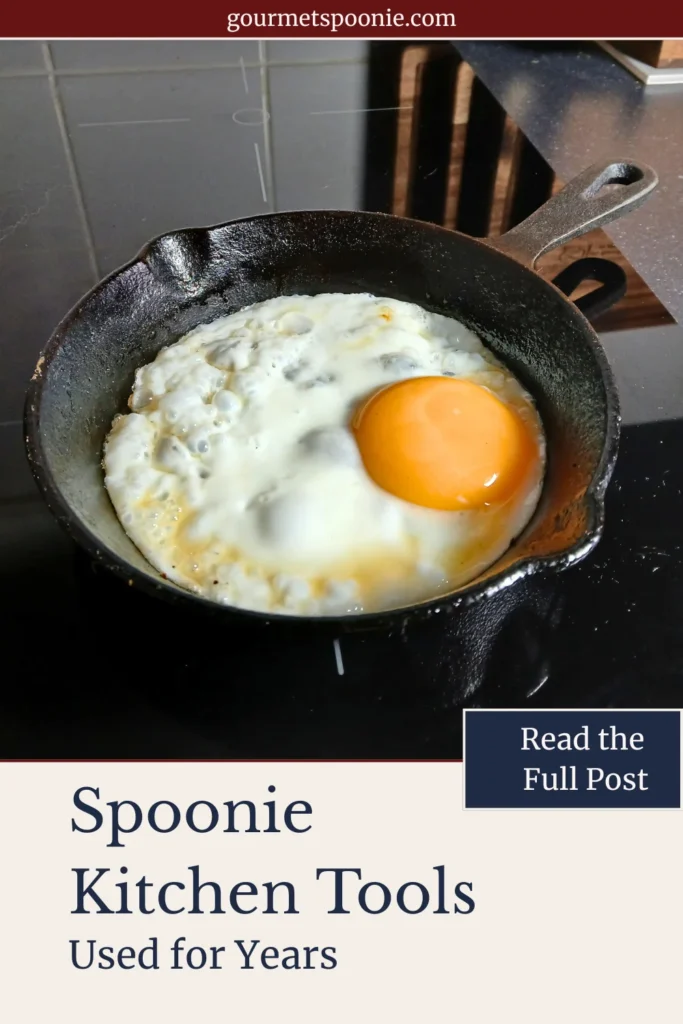
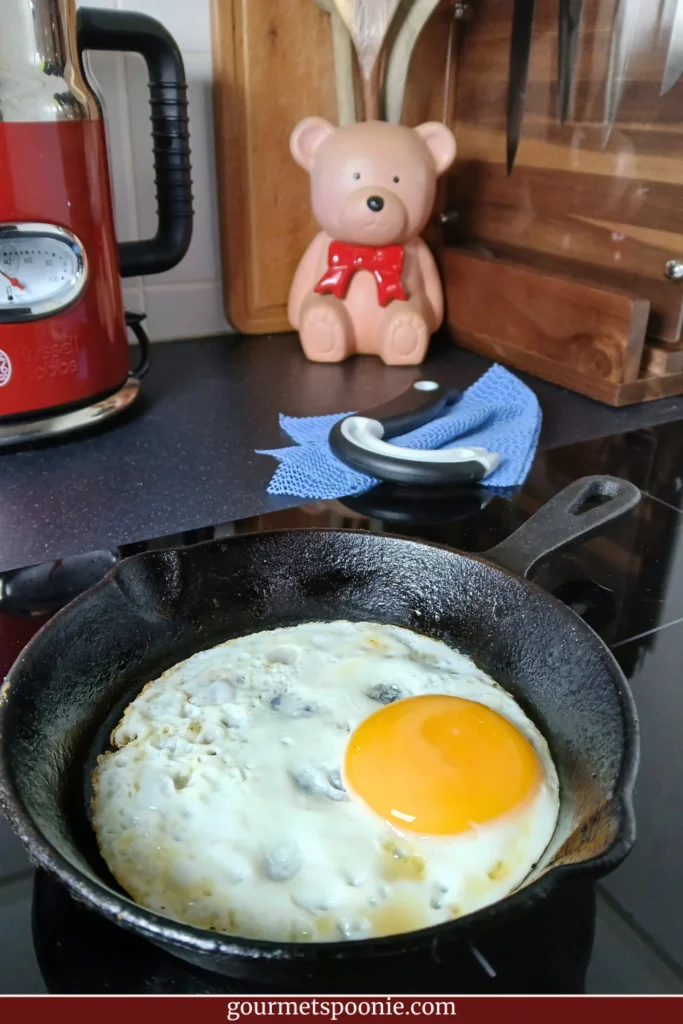
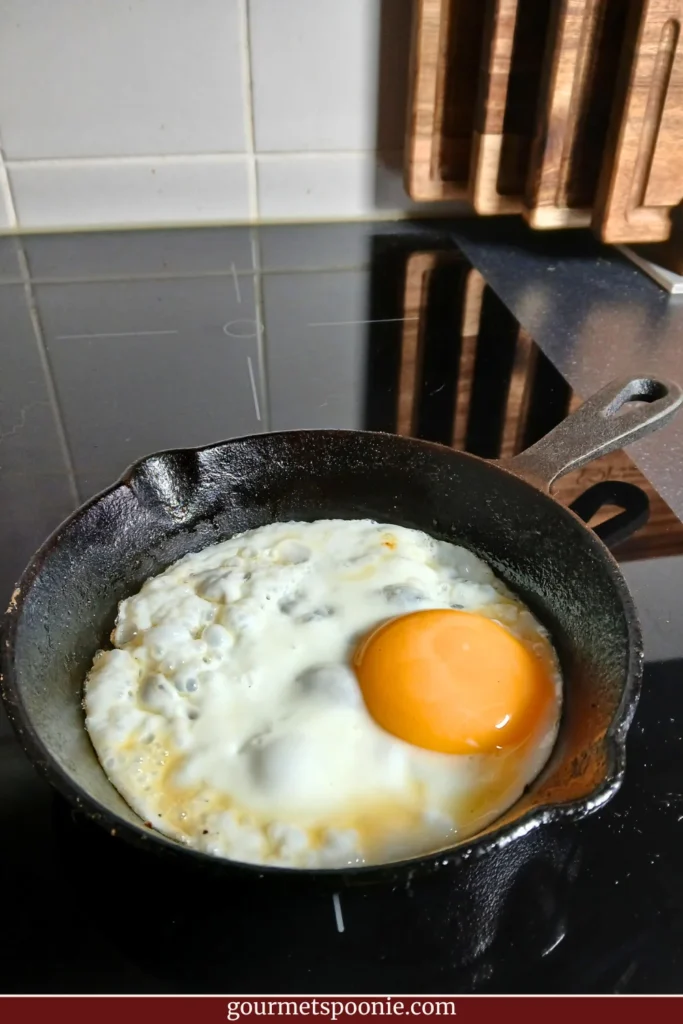
Then, my daughter got me this tiny cast-iron frying pan. Just 15 cm in diameter—and it weighs only 0.76 kg. That’s a weight my wrists can actually manage. Sure, it means I can’t make anything larger than a fried egg in it, but that’s a small price to pay.
And yes, I still have a ceramic frying pan, too, for when I need it. I don’t like it—and I don’t have to—but it’s still useful. Once that one’s ready for the bin, however, I intend to replace it with a stainless steel one. Naturally non-stick and, apparently, with most of the advantages of a cast-iron pan, but without the weight.
A Space For Joy
A wheelchair accessible kitchen doesn’t have to be cold, clinical, and ugly. Adaptive kitchen tools shouldn’t be ridiculously expensive, or of a quality that doesn’t justify the hefty price tag.
We can—and should—have a cooking setup that satisfies both our needs and our senses. This can sometimes feel like a juggling act, but once you figure out what exactly works best for you, it does more than just free up physical constraints.
My kitchen is a place of joy. A place that pleases the eye and makes me want to spend time there. Which is pretty important when you’re an avid home cook and recipe creator.
How does your cooking setup work for you?
Frequently Asked Questions
Adaptive kitchen tools are cooking aids designed—or repurposed—to make cooking easier, safer, or less physically demanding for disabled and chronically ill people. Some are specifically marketed as accessibility aids, while others are ordinary kitchen tools that simply work better for certain needs.
Not necessarily. Some of my most-used kitchen aids are inexpensive items I adapted myself, like rubber shelf liner used as jar grippers. The best adaptive kitchen tools are often the ones that genuinely fit your body and cooking habits—not the most expensive ones.
Tools that reduce grip effort or provide better leverage can make a big difference. Jar grippers, ring & pull can openers, ergonomic peelers, lightweight cookware, slow cookers, and microwaves are all useful options depending on your specific needs.
Preparing meals becomes less time-consuming and labour-intensive with a slow cooker. They make cooking easier when you’re low on energy and cut down on standing, lifting, and all that repetitive kitchen tasks.
Absolutely. Accessible design doesn’t have to be unappealing, sterile, or uninviting. You can have a kitchen that’s both practical and aesthetically pleasing, with a layout and tools that fit your needs, while still feeling warm and welcoming.
Want more Spoonie-friendly kitchen tips?
Sign up for the newsletter and get them delivered straight to your inbox.
Enjoyed this Post? Pin it!