My 93m² Spoonie Home: Urban Life With Chronic Illness
Life with chronic illness in a small flat is, in many ways, surprisingly unremarkable.
Sure, we experience challenges healthy people don’t even know exist. But also moments of intense joy, made more special because we don’t take them for granted.
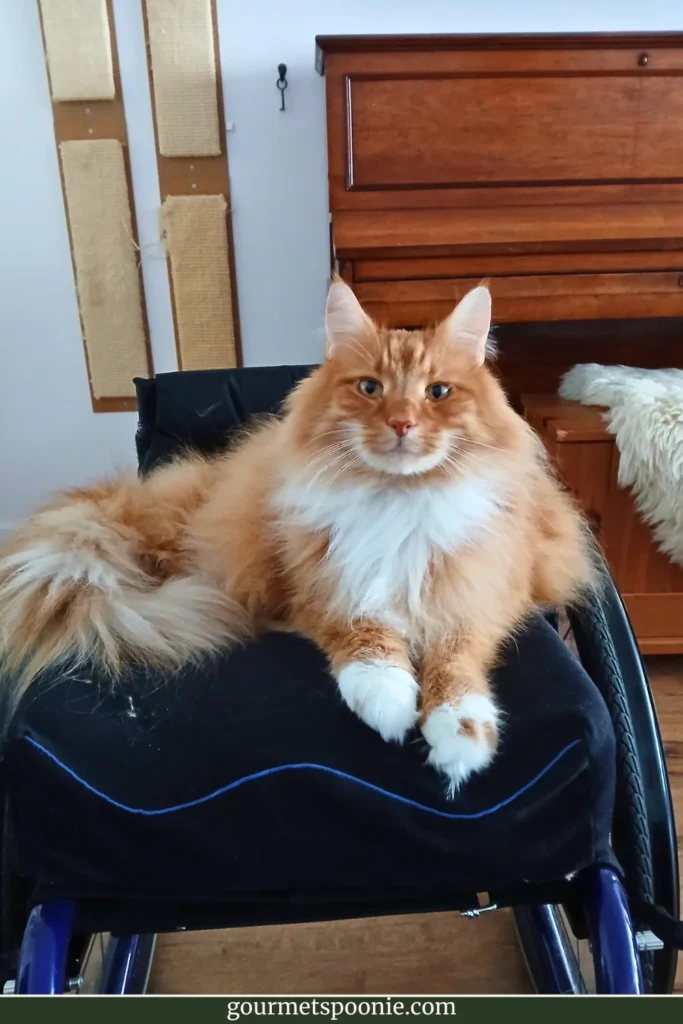
One of those pleasures, to me, is my 93m² Spoonie Home: a fully wheelchair accessible ground-floor flat. A place where I can be myself (no autistic masking), and where nothing is out of reach.
My 93m² Spoonie Home
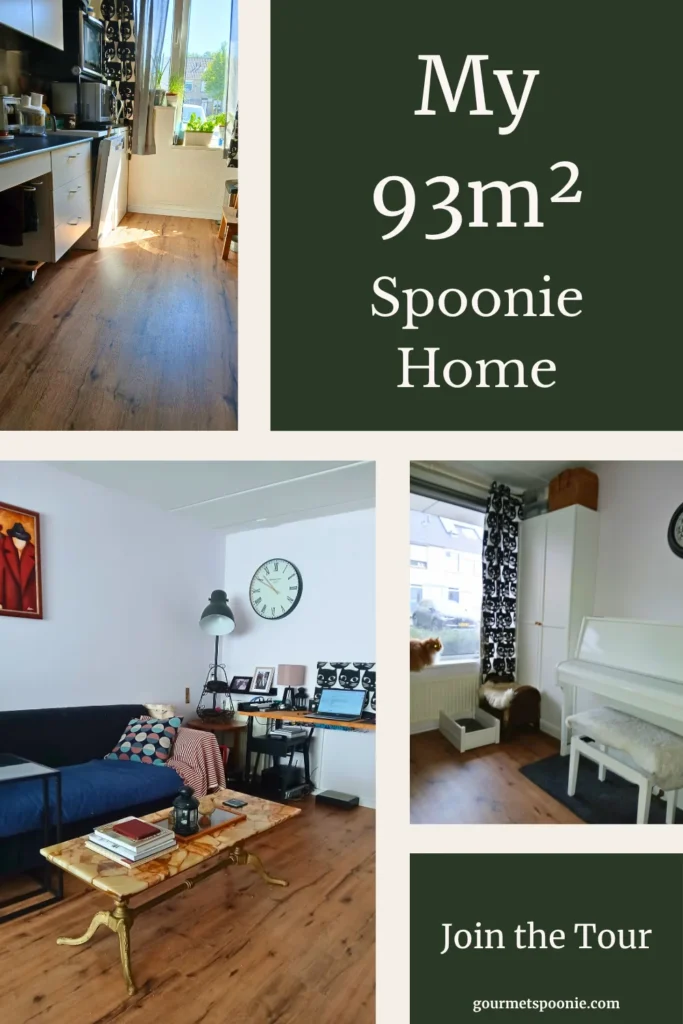
Welcome to my 93m² Spoonie Home: a two-bedroom ground-floor flat in the Netherlands. It may be modest, but it’s large enough for me, my three cats, my pianos, and an ever-growing collection of books. With east and west-facing windows, it’s not ideal for growing food indoors, but on the flip side, temperatures hardly ever rise above 25 centigrade during summer. And that’s a definite win.
Life With Chronic Illness In A Small Flat
If you’ve ever wondered what staying at home all day with chronic illness is like, let me take you by the hand and show you. But first, I want you to know that this is just one chronically ill person’s experience. There’s no one size fits all.
This is what life with chronic illness looks like in my small flat.
Living room: where most of my day happens
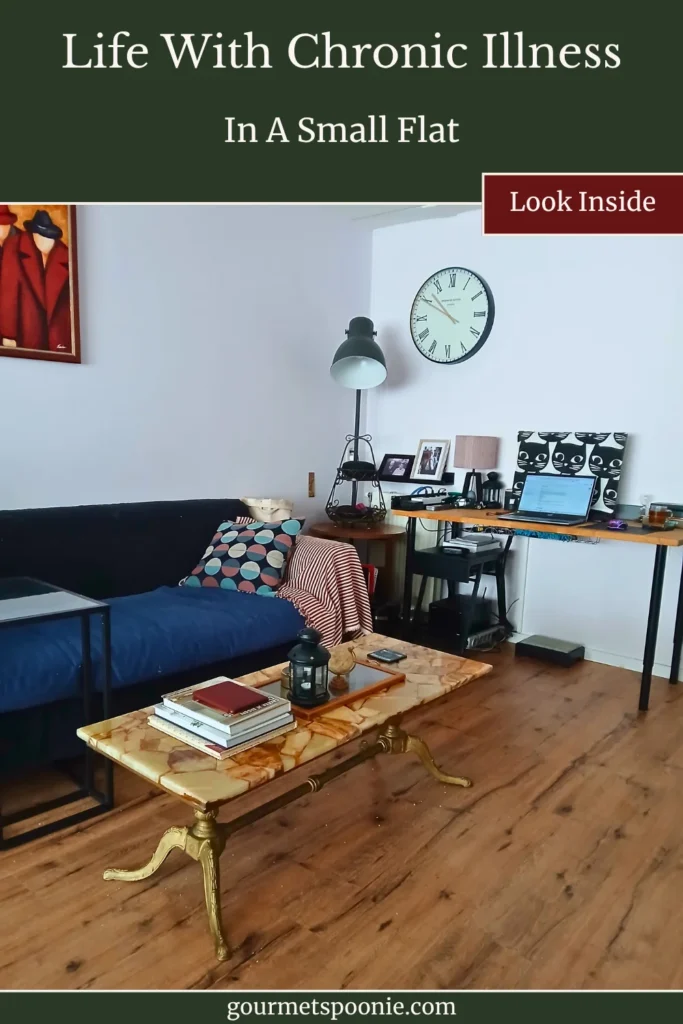
Most of my waking time I spend in the living room, which doubles as my office. Here, I have my desk, my laptop, my diary (yes, an old-fashioned physical one)—and my Google Nest Mini, so I can listen to my Spotify playlists as I work.
This is where I write my blog posts, my newsletter, my… well, basically everything. It’s where I do my research, create graphics, and schedule my social media and Pinterest content.
It’s also the room where I receive guests, or unwind on the couch with my cats. And while it could definitely do with an aesthetic upgrade (or two), it’s a nice place to be.
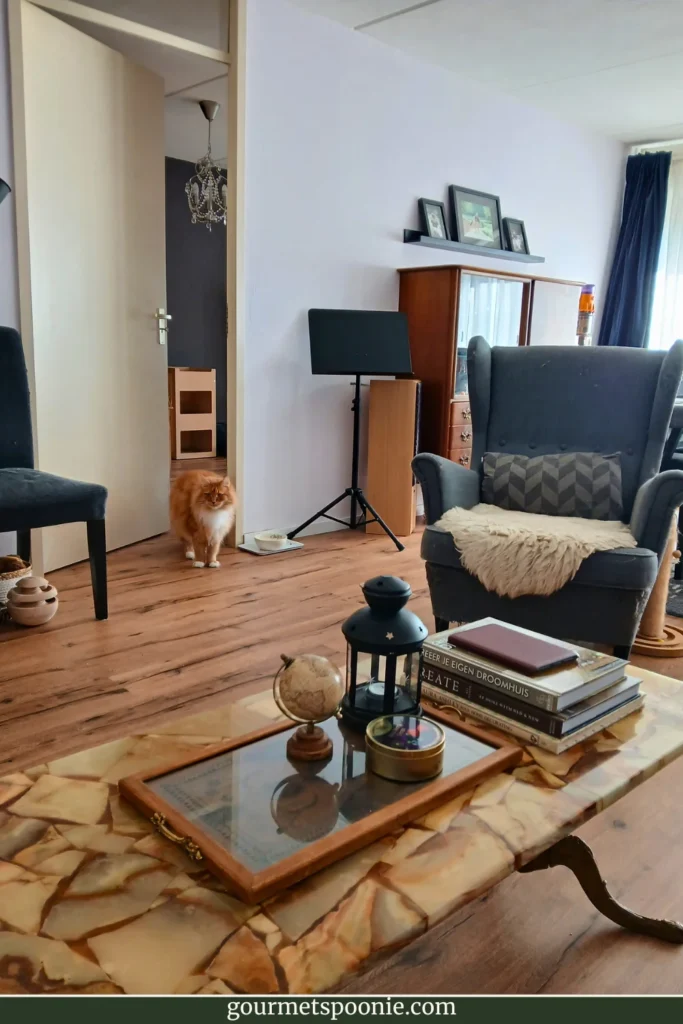
It’s the heart of my small home.
Kitchen: a separate space for accessible cooking
Of course, as an avid home cook and recipe creator, I also spend a lot of time in my kitchen.
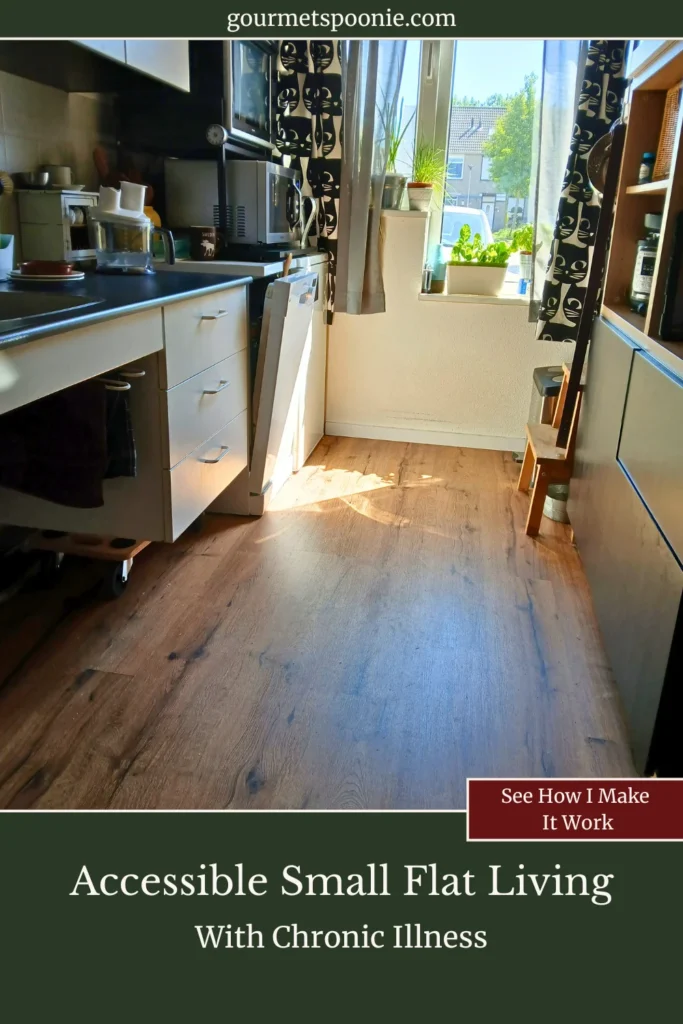
Unlike most modern houses, my Spoonie flat has an autism-friendly separate kitchen, which is one of the things I love most about my home. No lingering food smells in my living room. No overwhelm when cooking for guests.
And did I mention that it’s also fully wheelchair-accesible?
Bedroom: choosing function over atmosphere
One of the first things I needed to settle on when I moved into this flat was which of the two bedrooms should become The Bedroom. With both rooms being roughly the same size, the choice wasn’t as easy as it might sound.
Should I choose the west-facing room, with its lovely evening glow, or the east-facing room with adjacent bathroom?
In the end, I chose function over atmosphere. After all, ambiance fades quickly when you drift into unconsciousness. But when you wake up in the middle of the night with an urgent need to take a leak…
Multifunction room: a work in progress
With the bedroom issue settled, the other bedroom now became the music room. At least, that was the plan, but it ended up being more of a dumping ground. Sure, my pianos are there. So are the cat trays, the printer, and a lot of spare stuff that has no proper home.
Yet.
But I intend to change that. The ultimate goal is to turn it into a cosy wheelchair-accessible home library, combining three main functions: cat room, music room, home office & library. That’s going to take a while, but I’m OK with that.
Spoonie Home Life
This is what life with chronic illness in a small flat looks like for me.
It follows the same basic pattern every day, which satisfies my autistic need for structure. It also allows me to do meaningful work, engage with friends and family, and lose myself in my passions.
My flat is more than just a residence. It’s home.
Frequently Asked Questions About Chronic Illness Home Life
Chronic illness home life in a small flat is often easier than living in a larger home. There’s not much upkeep, no stairs to conquer, and everything is always close at hand. Spread out over a day, that can save a lot of energy.
Certainly. And, while a ground-floor flat is ideal, as long as the building has a dependable lift, you could even live in a top-floor flat with no problem. The interior layout of your flat is by far the most determining factor.
A separate kitchen helps prevent all kinds of autistic overwhelm. No lingering smells in the living room, no clatter of kitchenware when you’re trying to have a conversation with your guests, and no need to divide your attention between guests and prep when you’re cooking.
Honestly, I don’t. Not yet. While I don’t like its current state, turning it into my dream home library is going to take time and effort—and a lot of both. And I’m OK with that.
I do. I like my home. It’s not just where I eat and sleep; it’s my social hub and workspace, too. Not having to go out in public saves energy, and prevents autistic overwhelm.
Want ideas to help you create your perfect Spoonie home?
Sign up for the newsletter and get Spoonie-friendly design ideas straight to your inbox.
Enjoyed this post? Pin it!