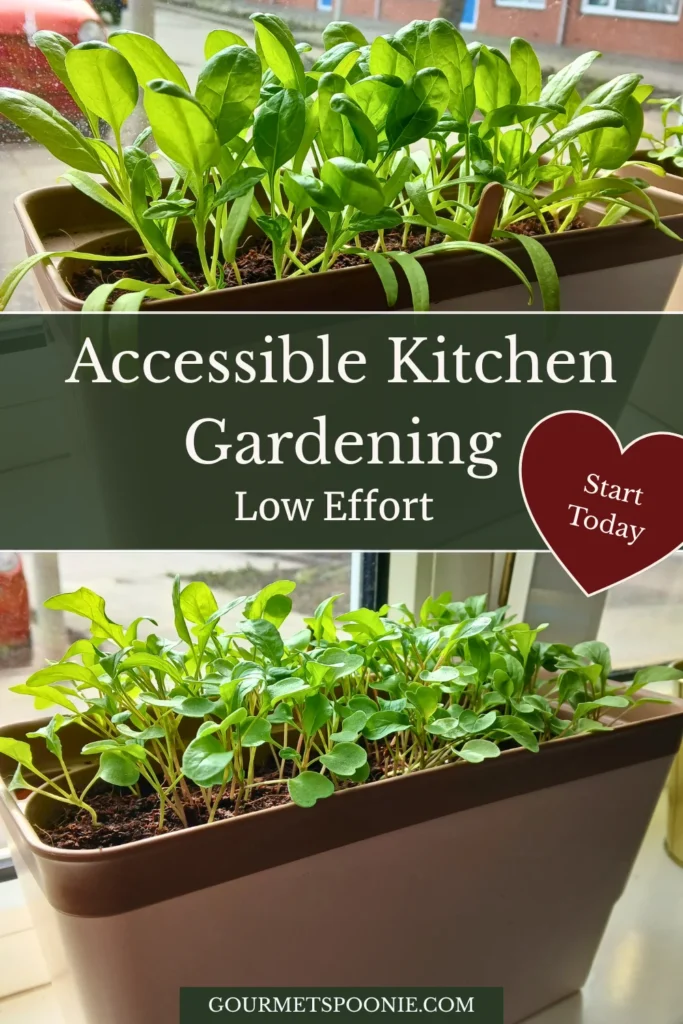
Accessible Kitchen Gardening: Starting My Spoonie Windowsill Garden
I’m a terrible gardener… so naturally, I started a windowsill garden. 🌱
Here’s how I’m making it actually work this time—with less effort and more realistic expectations.
I’m a lousy gardener. There, I said it.
Yet, undeterred by previous failures (and there were many!) and my increasing disability, I decided to try again. I’m stubborn. Besides, accessible kitchen gardening just seems like a no-brainer: home-grown food, straight from my windowsill garden.
But will I actually succeed this time?
What Is Accessible Kitchen Gardening
Accessible kitchen gardening is growing your own food at home in a way that takes your energy, mobility, and mental resilience into account.
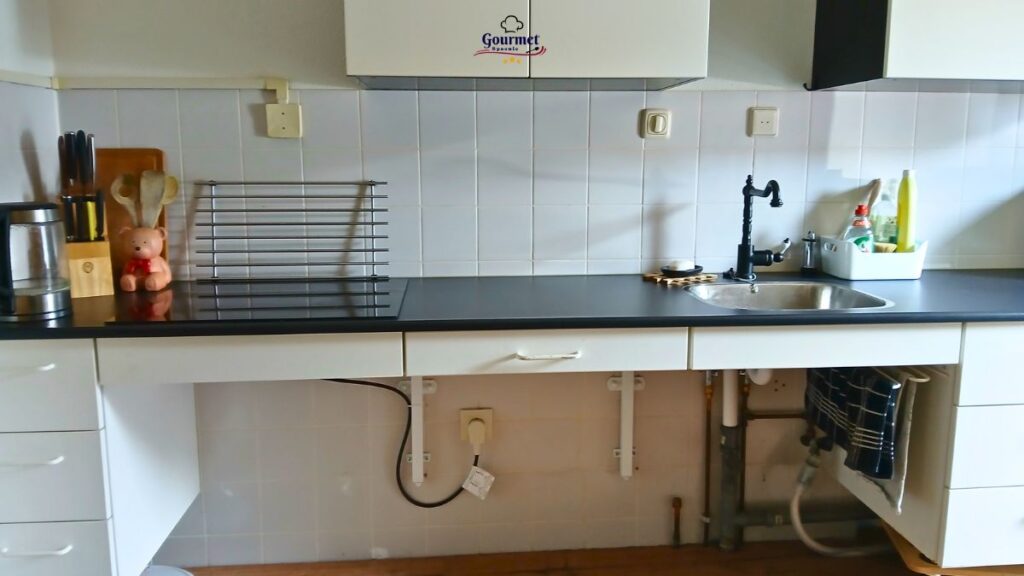
For me, having to tend a garden that’s hard to reach, or that expects me to know exactly when and how much to water, simply wouldn’t work. I need my garden to be fuss-free and able to withstand a fair bit of black-thumb abuse.
Why accessible gardening works for Spoonies
It’s the kind of gardening that actually works for Spoonies, and actually gives back more than it takes:
- No more wasting energy on frequent shopping trips for fresh produce
- Fresh greens stay fresh; you harvest only what you need at the time
- The tasks of keeping your plants alive are small and well though-out
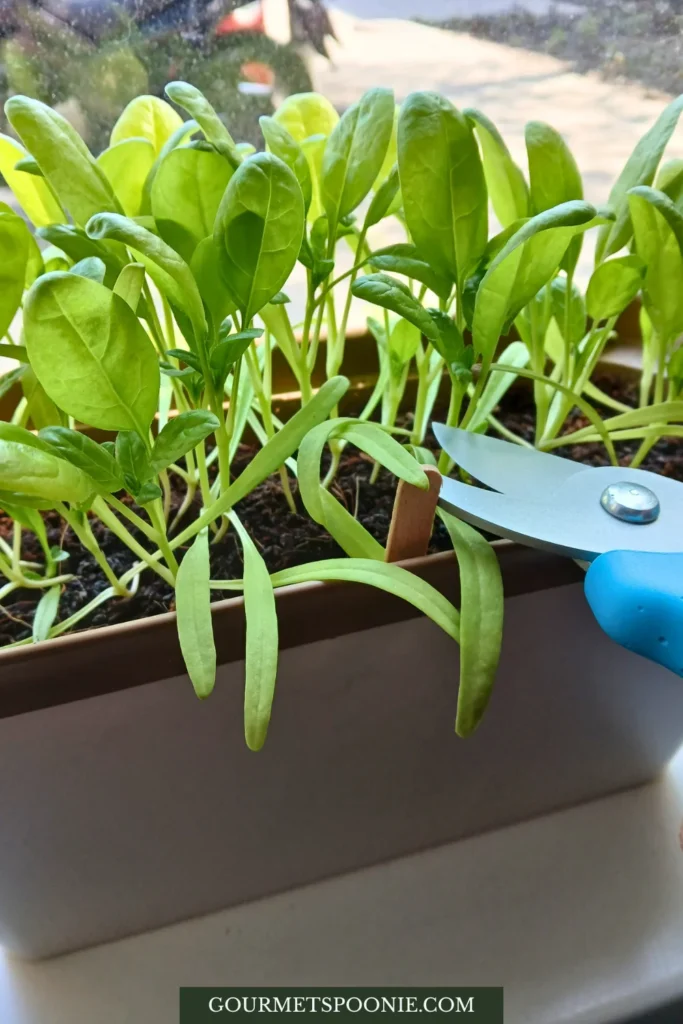
- You get immediate reward for your (totally manageable) work: super-fresh produce every time. Just snip and use.
Why I Started an Indoor Kitchen Garden
I didn’t start my windowsill garden out of hobbyism. In fact, I never even liked gardening.
But I enjoy shopping even less. It gobbles up too many spoons: going to the shop, getting my groceries, hauling it all back home, unpacking, putting everything away…
Having to do that several times a week so I’ll have fresh veg is definitely not my idea of fun.
Then there’s the cost. Prices going up, and up, and up. And if I buy veggies only to have them go bad in the fridge, I may as well be throwing money straight into the compost. I’d rather use my money on other things.
So that’s what I did: invested in a modest kitchen gardening setup in hopes it will pay off.
What I’m Growing in My Windowsill Garden
I bought six self-watering containers, three deep pots, a cheap plant sprayer, two coconut coir bricks, and several bags of indoor potting soil. I still had some seed packets, so I only needed a few more: spinach, Swiss chard, beets, and arugula.
Leafy Greens for Easy, Frequent Harvests
I love greens, but leafy greens in particular don’t stay fresh for long. Not even in the fridge. And not everything I like is easy to find locally. The veggies that are available are often expensive. All good reasons to grow my own.
Here’s what I’ve got going right now:
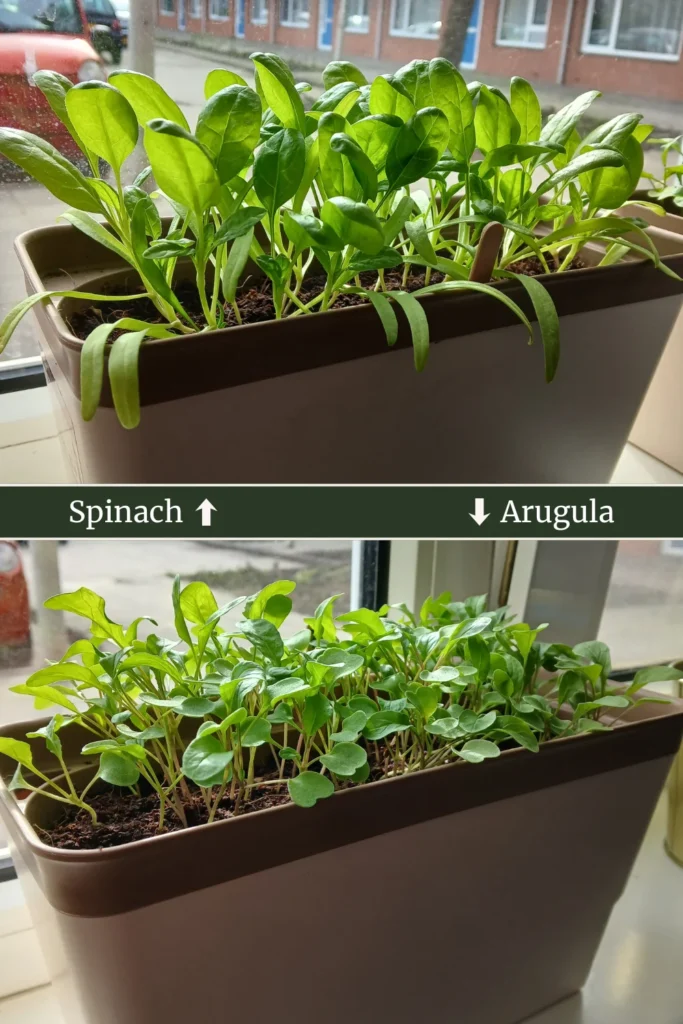
- Spinach, a true staple: I typically eat it at least once a week, for example in my pasta with chickpeas and spinach.
- Arugula. A fast grower, but not something I particularly like. However, I like it in pesto—and I love pasta, so it earns a place in my windowsill garden.
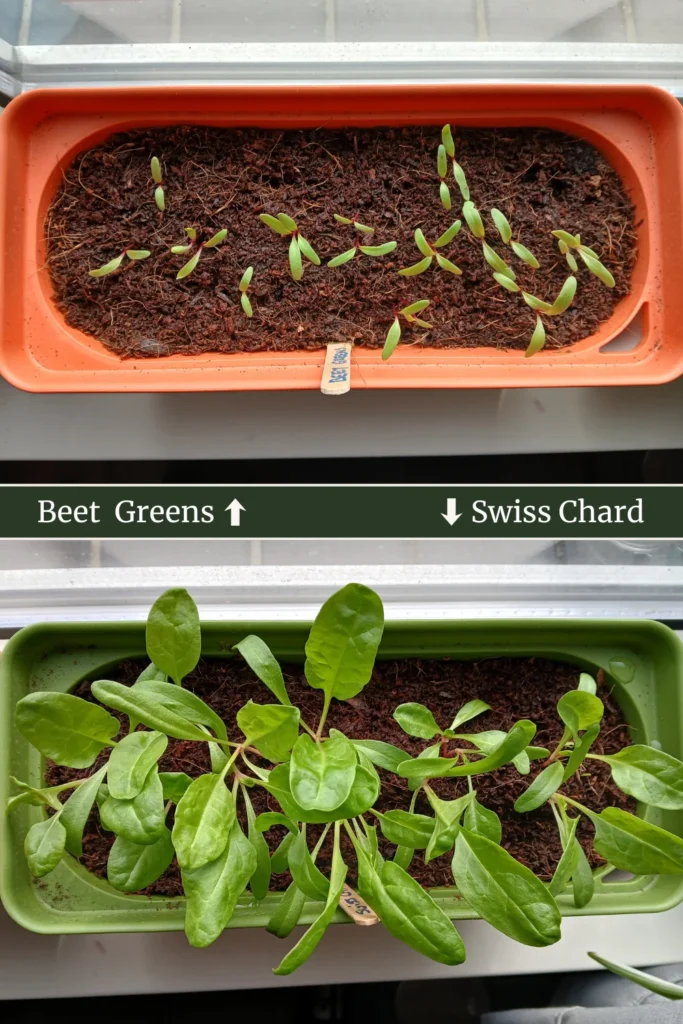
- Swiss chard. So tasty, but rarely available in supermarkets here. So that’s an easy choice.
- Beet greens. Technically just part of the beet plant, but I’m growing them for the leaves rather than the roots. Shallow pots are ideal for that. Also, I’ve never seen beet greens for sale anywhere.
- Tuscan kale. Just one. In a deep pot, because it needs space. But it’s going to be a while before I can harvest it. Until then, it will just look lovely.
Low-Effort Veg for Occasional Harvests
- Kohlrabi. Slow, but satisfying—if all goes well, which is yet to be seen. But I figure it’s worth the gamble.
Herbs That Keep Growing Back
Next up are the herbs I use most often.
- Parsley. A no-brainer. Works in almost everything.
- Chives, a personal favourite. I love its mild onion smell and flavour.
- Dill. Sweet, fragrant, and delicate. I often use it with mint (which is currently taking over my tiny outdoor garden). Pairs well with fish, too.
Regrowing Spring Onions from Kitchen Scraps
I’ve been regrowing spring onions from kitchen scraps for years. Buy once, use for weeks. I usually regrow them in water because it’s easy, but they actually do better in soil. They last longer and are more nutritious that way.
My Low-Effort Windowsill Gardening Setup
Ten pots. It might sound like a lot, but it’s actually quite manageable. Even for a black-thumbed Spoonie like me. But I do face some challenges.
Light: Making an East-Facing Window Work
My indoor kitchen garden has east-facing windows. Sure, it could be worse. Imagine having to deal with north-facing windows…
But west-facing windows would be much better. However, those are in the living room and in my future home library. Both are rooms where the cats have free reign. Nuff said.
Also, since energy-prices went up like crazy when Putin invaded Ukraine in 2022, I can’t afford to heat my house properly, so inside temperatures drop to 15°C in the colder months, and stay low until well into spring. Not ideal growing conditions.
That said, if things go well, I intend to buy grow lights, and perhaps a small indoor greenhouse setup. I’m not quite sure how that would work in terms of accessibility, but that’s not an immediate concern.
Containers and Watering Without Overthinking
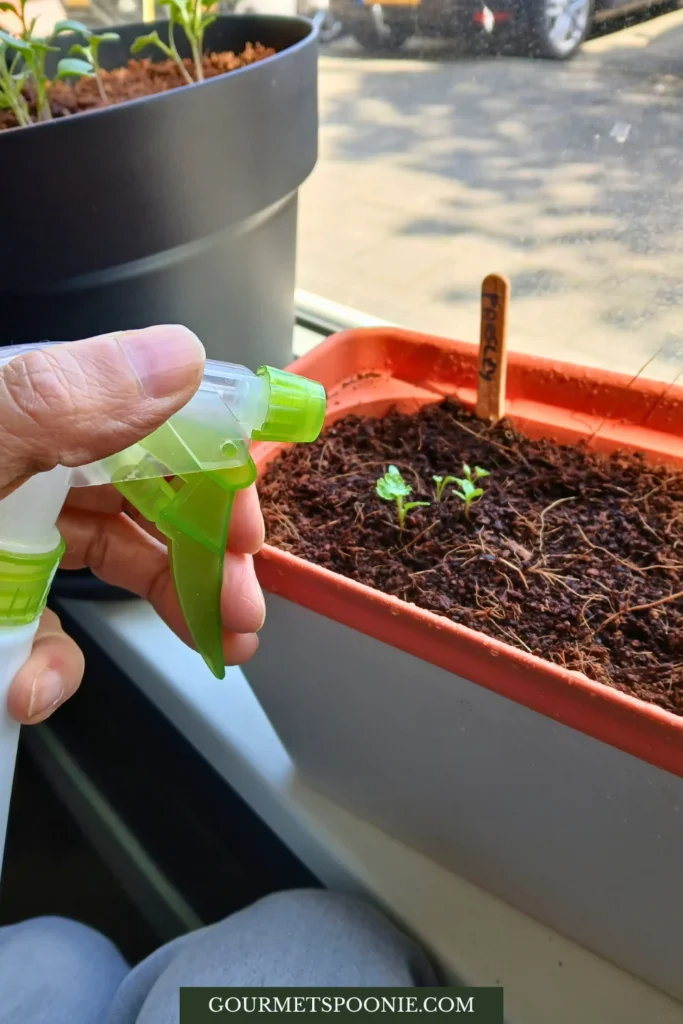
I specifically chose self-watering pots to help reduce the risk of overwatering or underwatering. But there are limitations to that setup: During germination, the self-watering system won’t help one bit.
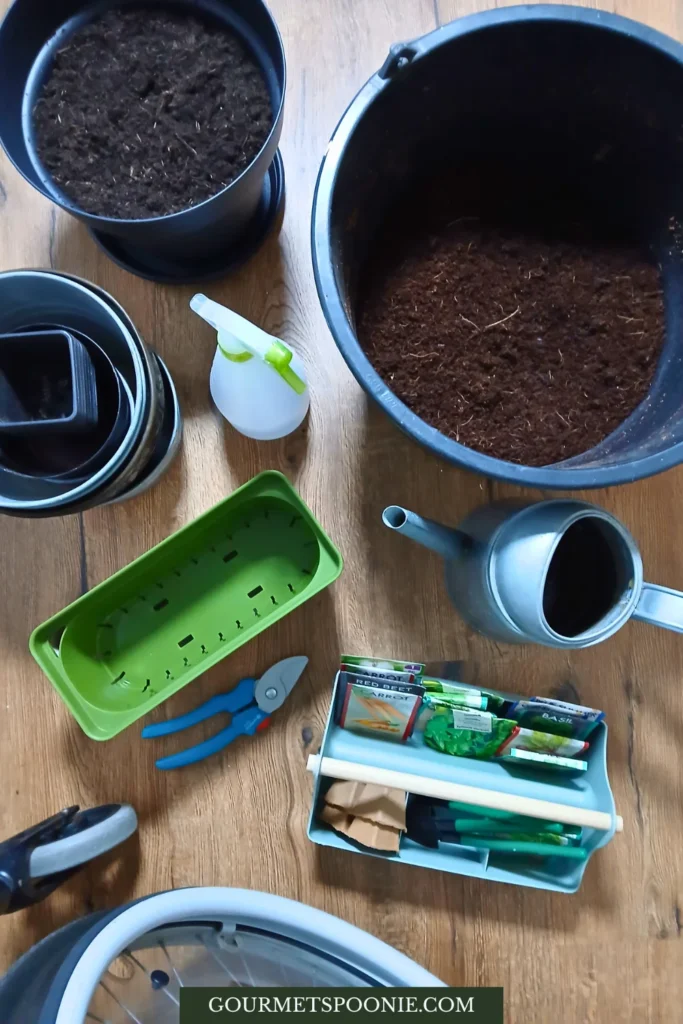
That’s where the spray bottle comes in. I spray once or twice a day to keep the soil nice and moist during this stage. Once the seedlings are established, I switch to top watering (gently!), and only later start using the self-watering system.
How My Indoor Garden Grows
Most of my seedlings are growing surprisingly well, with one glaring exception: chives. I’ve had great success with them outdoors in the past, so this has been a bit of a disappointment.
Maybe that’s because I used old seeds. Maybe it’s just too cold. Or both. I don’t really know. Just figuring things out as I go.
My parsley took quite long to germinate, and even now, it’s just a few tiny sprigs. Not sure if that’s going to amount to anything, but we’ll wait and see. Worst case scenario I’ll just buy new. From a garden centre.
Why I Haven’t Harvested From My Windowsill Garden Yet
Right now, my indoor kitchen garden is still in its infancy. But I can barely wait for my plants to mature so I can start harvesting, ideally using a cut-and-come-again approach so the plants keep producing.
Meanwhile, I’ve been growing mung bean sprouts. But that’s an entirely different way of growing food and deserves its own post.
Novice Gardener Mistakes I Made
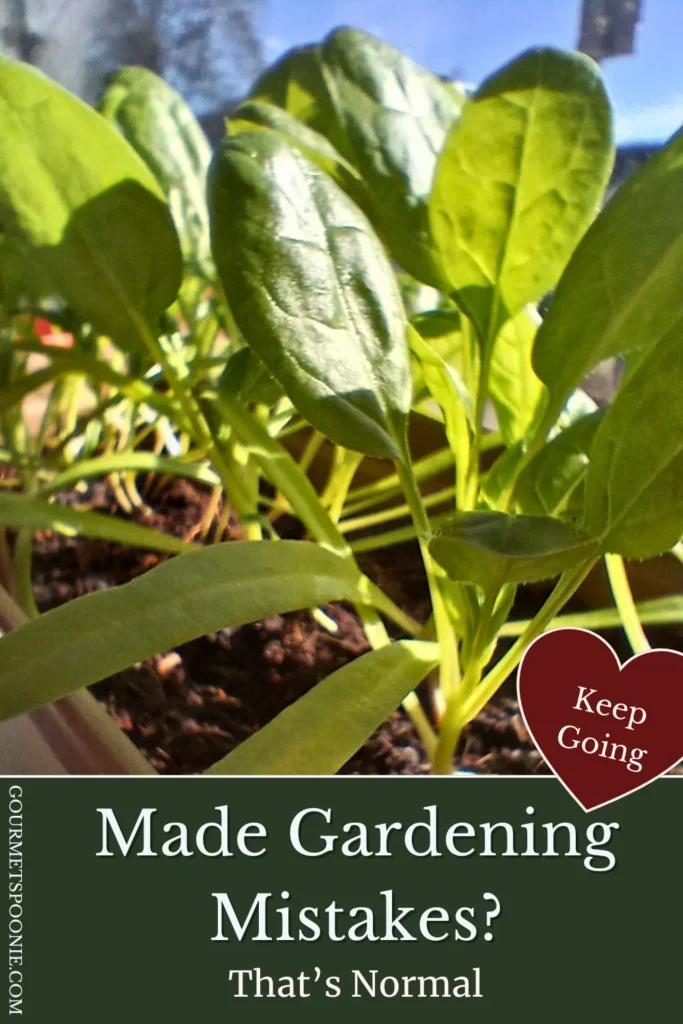
Will these be my last mistakes? I highly doubt it. But that’s all part of the game. With every mistake I make I learn a new and valuable lesson.
- Using old seeds. Honestly, I think that’s the main reason my chives haven’t germinated. In the past, I’ve grown them from seeds outdoors in early March, and never had any problems, so there’s that.
- I didn’t set up my first self-watering pot correctly, but only discovered my mistake after sowing. So I had to find a work-around. Lesson learnt.
- I sowed my Swiss chards far too densely. But… I just thinned aggressively and used the extras as micro greens. Problem solved.
Starting Your Own Accessible Kitchen Garden
If you want to start your own accessible indoor kitchen garden, here are a few things I’ve learnt so far—so you don’t have to make all the same mistakes.
Start small. That’s one thing I actually got right. I started with just two pots, then gradually added more as I figured things out.
If you’re using self-watering pots (highly recommended) take the time to understand how they work before adding soil. It will save you a lot of hassle later.windowsill gardening
Make sure you have easy access to your plants. You’ll need to check up on them regularly, and if it’s hard to reach them, you simply won’t. Trust me. (I’ve got a spider plant on top of a high bathroom cabinet. It survives because it thrives on neglect.)
And finally: you will make mistakes. Embrace them. It’s how we learn.
Your kitchen garden doesn’t have to be perfect. It just has to work for you.
Want more ideas to help you create your perfect Spoonie home and garden?
Sign up for the newsletter and get Spoonie-friendly design ideas straight to your inbox.
Enjoyed this post? Pin it!