Healthy Lunchables: Low-Effort Lunch Boxes for Spoonies
Lunchables—many of my US readers probably grew up loving them, and honestly, it’s a smart bit of marketing.
Vegetarian/Vegan | GF | Soy-free | Nut-free | No rice
From a health perspective, though, they’re not exactly ideal. Not in their original form.
Enter my idea of Healthy Lunchables: a simple way to turn a DIY lunch box into something balanced, flexible, and Spoonie-friendly.
To be honest, I never even heard of Lunchables until quite recently when one of my Substack readers mentioned them in a comment. I got intrigued, did some research, and immediately saw why she liked the concept so much.
Designed for children, these lunch kits can be rather appealing to adults, too. Especially to Spoonies, who simply don’t always have the energy to prepare a proper lunch. They’re just so convenient and easy to assemble.
But…
Consumer Reports tested these and similar lunch kits, and found that ‘(…) some kits had potentially concerning heavy metal and phthalate levels. And they’re too high in sodium, especially for kids.’ (Consumer Reports)
Why You’ll Love My Lunchables Alternative
My Healthy Lunchables formula takes the unhealthy parts of the original concept and replaces them with healthier alternatives. Same convenience, better nutritional value. Basically, I took the Plate Method and applied it loosely to the Lunchables framework.
This gives you:
- A balanced structure (fruit and veg, whole grains, and healthy proteins in every DIY meal kit).
- Lots of possible combinations.
- Easy prep (many of the meal components can be batch-prepped in advance).
- A Grab-and-Go (or Grab-and-Eat) lunch, ready the moment you need it.
- An obscenely pleased Inner Child.
Spoonie Tips for Healthy Lunchables
Creating your very own Lunchables alternative shouldn’t cost you a ridiculous number of spoons. But once you get started on them, it’s all too easy to go overboard. These tips will help you keep a tight hold on your spoons.
- Assemble your DIY lunch box straight from the fridge. No heating needed.
- Batch prep one grain in advance and use it as a base for your lunch box over the next four or five days.
- Batch cook one or two proteins and reuse.
- Chop and portion fruit and veggies in advance (or use pre-cut, frozen, or tinned)
- Avoid decision fatigue: repeat ingredients. There’s nothing wrong with that.
- Use shortcuts. Tins, bags, cartons, jars… they’re all fair game.
- Plating is optional. Your Lunchables will taste the same whether you eat them from a plate or straight from their containers.
DIY Lunchables Ingredients
I already touched on it earlier: this healthy Lunchables system is loosely based on the Plate Method, which I personally find an easy and intuitive framework to help you eat balanced meals without having to worry about getting enough nutrients.
If you’re not familiar with it, I’ll explain real quick:
Just imagine a plate. Fill it with half fruit and veg, a quarter whole grains, and a quarter healthy proteins. Add a little healthy fat, and voila! You’ve got yourself a healthy, balanced meal.
Applying this framework to your DIY Lunchables looks something like this:
First, you make sure half of your Lunchables kit consists of fruit/veg. Whatever fruit and veg you like. Raw, cooked, it doesn’t matter. As long as you like it and it’s easy, you’re good.
Next, add your grain: buckwheat, oats, gluten-free crackers or breadsticks, corn thins…
Then, you add your protein. An egg or some fish (if you eat those), beans, lentils, tofu, nuts… but try not to rely too much on heavily processed meats or meat substitutes (which often contain too much sodium and/or trans fats).
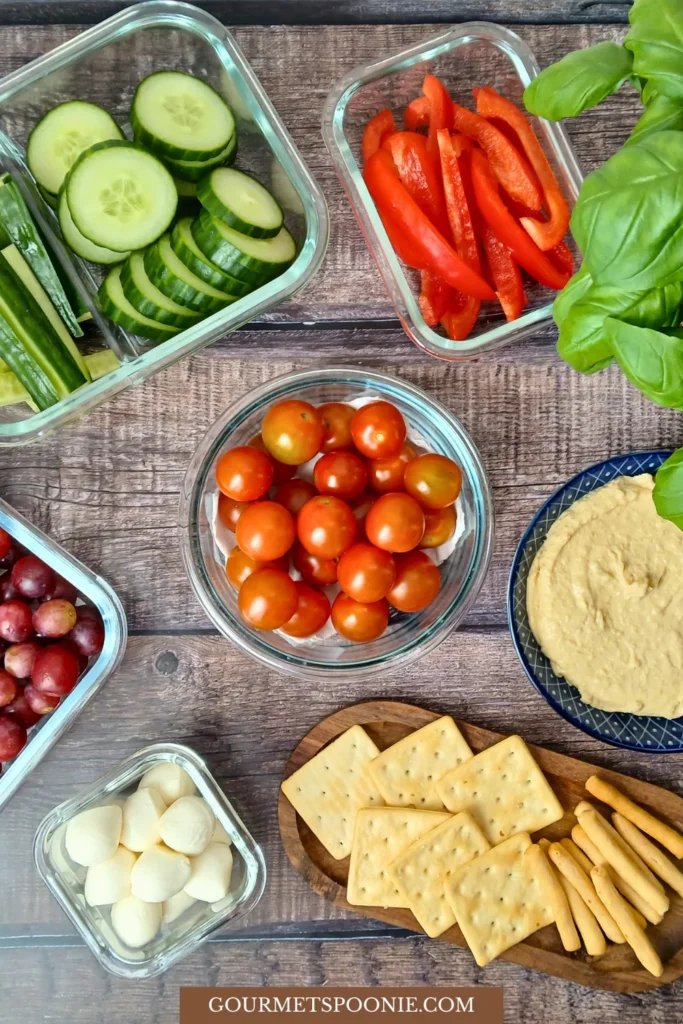
That’s all there is to it.
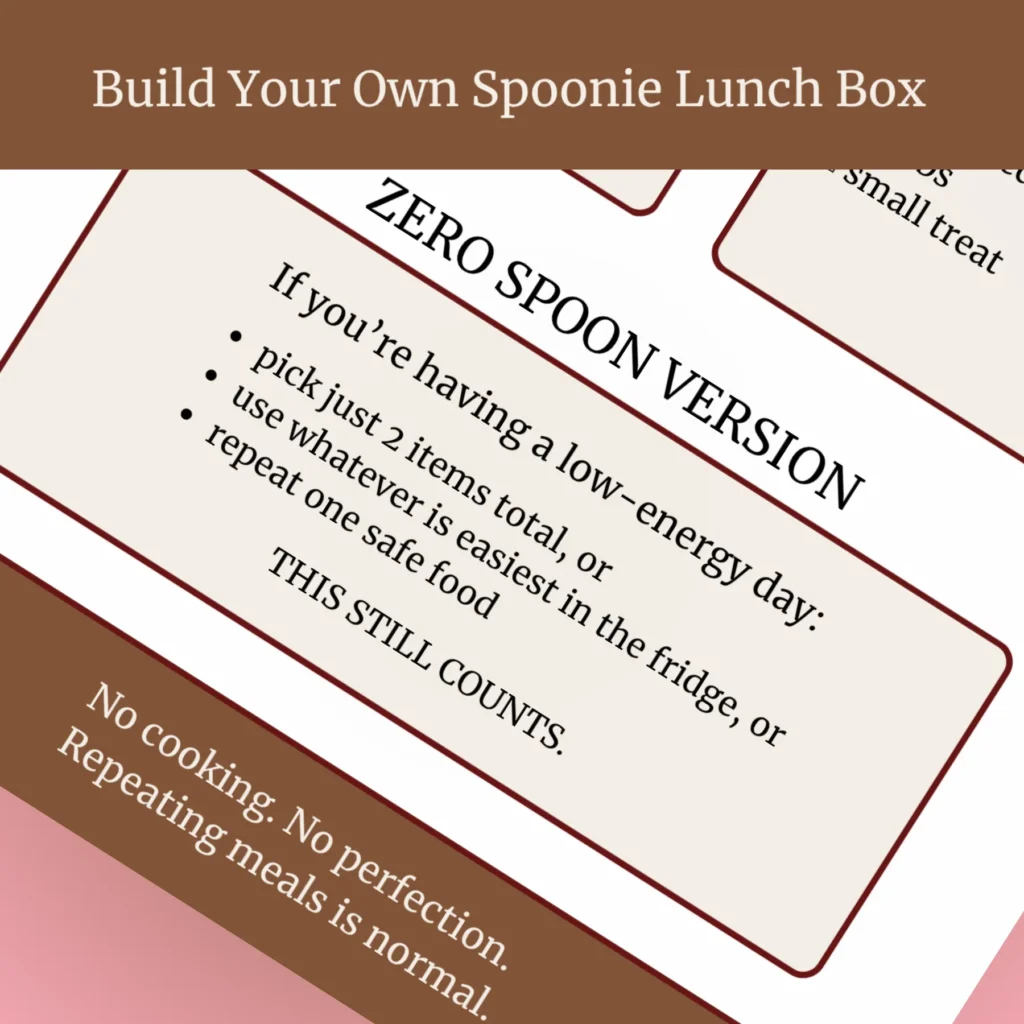
Want a little help?
I created a free ‘Build Your Own Spoonie Lunch Box’ printable worksheet to help you plan your DIY Lunchables more easily.
It comes in both A4 and Letter format, and you can reuse it as often as you like.
If this still sounds a bit abstract, don’t worry. I’ll show you some real-life examples in a moment.
How To Make Healthy Lunchables
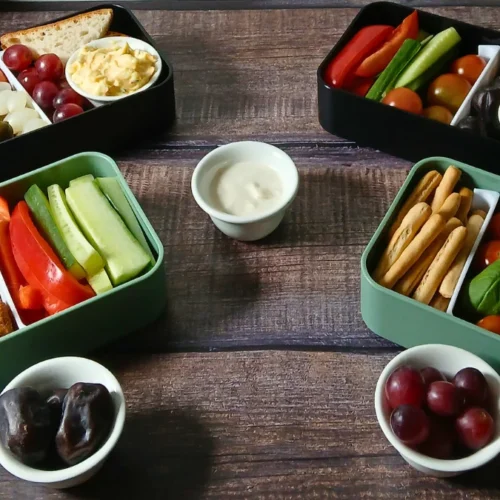
Healthy Lunchables (DIY Lunch Box Formula)
Equipment
- 1 bento box or similar lunch box
Ingredients
- Fruit and/or veg of your choice e.g. cucumber, cherry tomato
- Healthy protein e.g. hummus
- Grain or other carb e.g. gluten-free bread sticks
Instructions
- Choose your fruit/veg (half your plate or lunchbox)
- Choose your protein (quarter plate/lunchbox)
- Add grain or other carb (quarter plate/lunchbox)
- Assemble
- Enjoy your lunch
Notes
- Components can be mixed and matched.
- Prep ingredients in advance for easier assembly.
- Adjust ratios based on appetite and energy levels.
DIY Lunch Box Examples
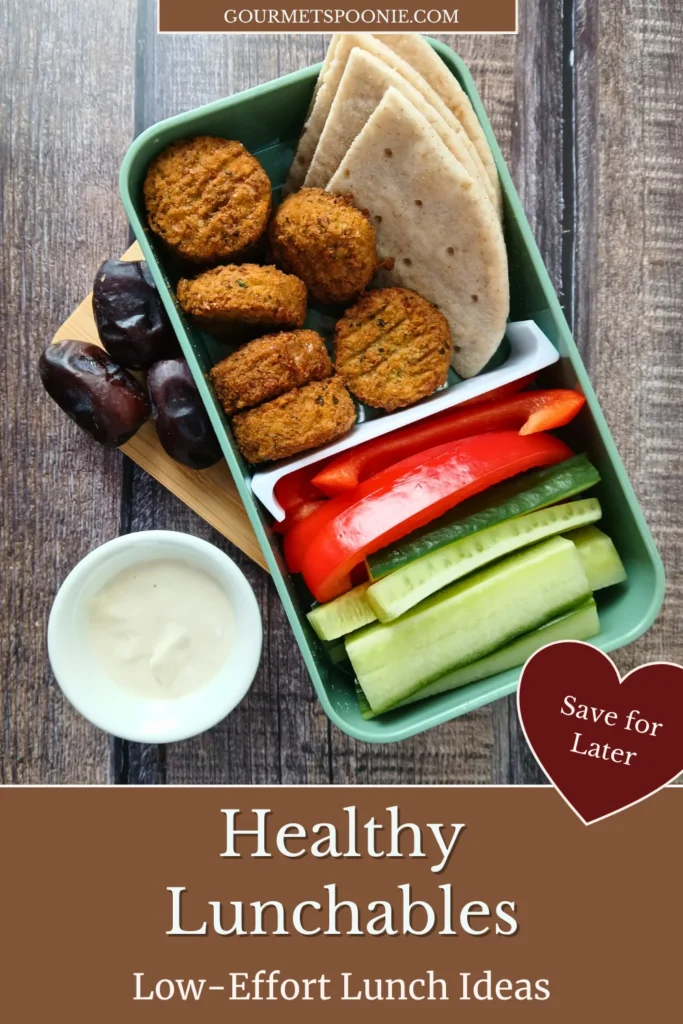
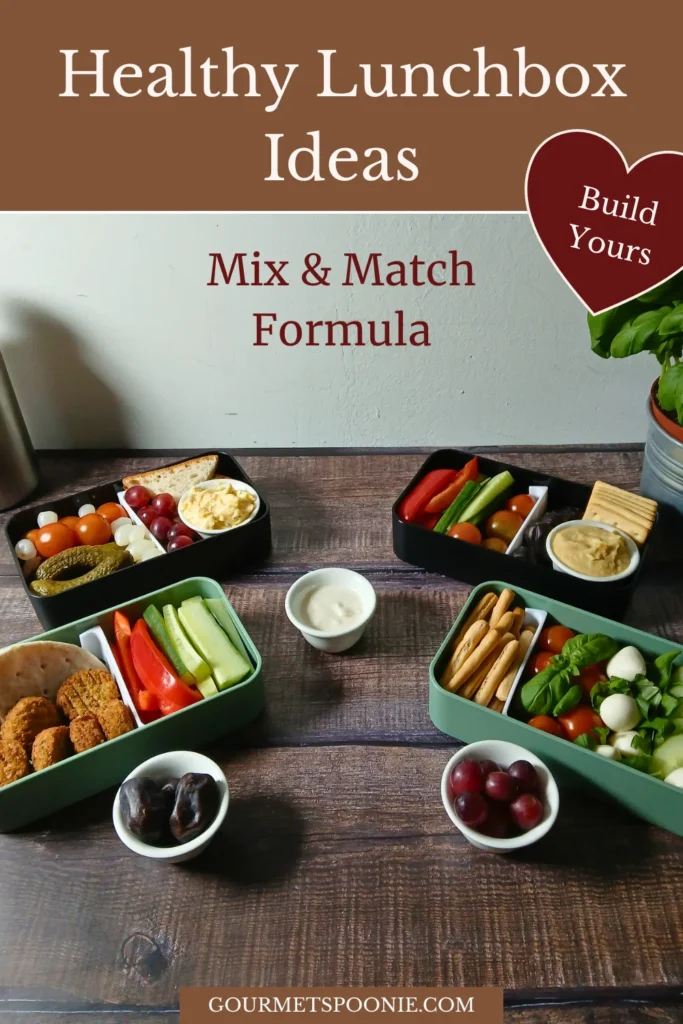
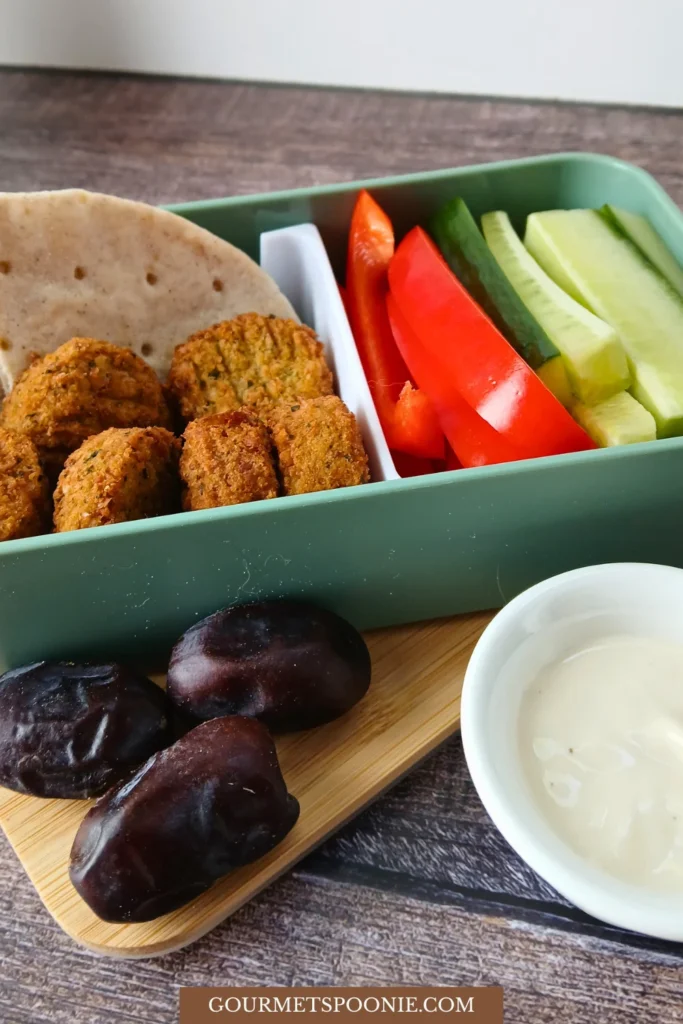
Middle Eastern Inspired Lunchables
- Cucumber, sweet pointed pepper
- Gluten-free Pita, or couscous
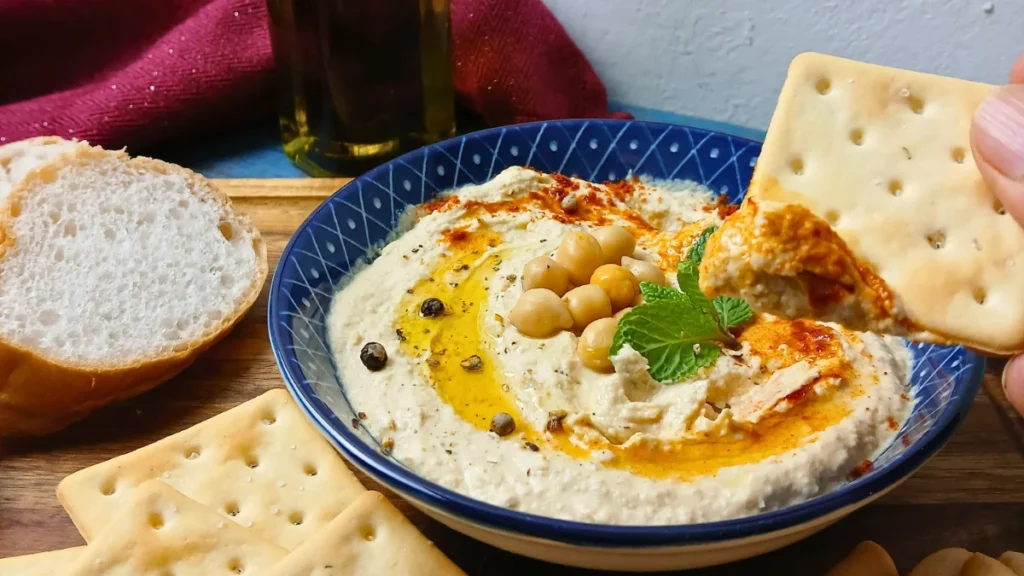
- Hummus
- Extra: 2-3 dates, or 1-2 date energy bites
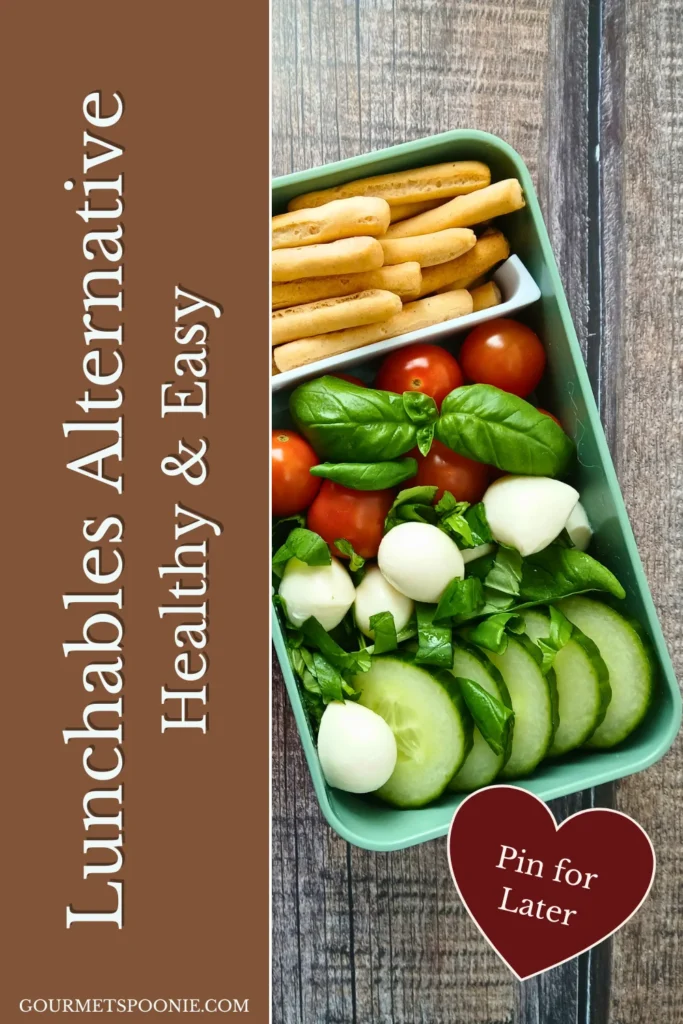
Italian Inspired Lunchables
- Cherry tomatoes, red onion (thinly sliced or pickled), basil
- Sliced or cubed slow cooker polenta
- (Vegan) mozzarella, cannellini beans, or white bean pâté
- A few pieces of watermelon
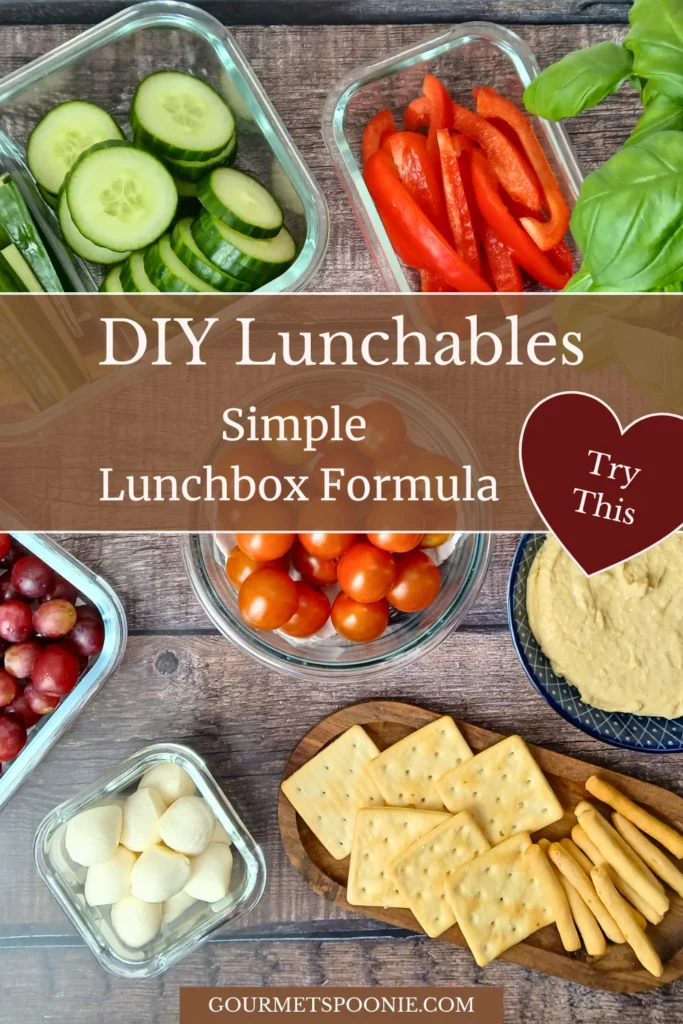
Zero Spoon Lunch Box
- Pre-cut veg (cucumber, bell pepper strips)
- Gluten-free breadsticks
- Store-bought hummus
- Extra: whatever fruit is already in the fridge
Dutch-Inspired Lunch Box
- Cucumber slices, gherkins, silverskin onions
- Gluten-free bread, cut into squares
- Egg salad (or vegan egg salad)
- A handful of grapes or berries
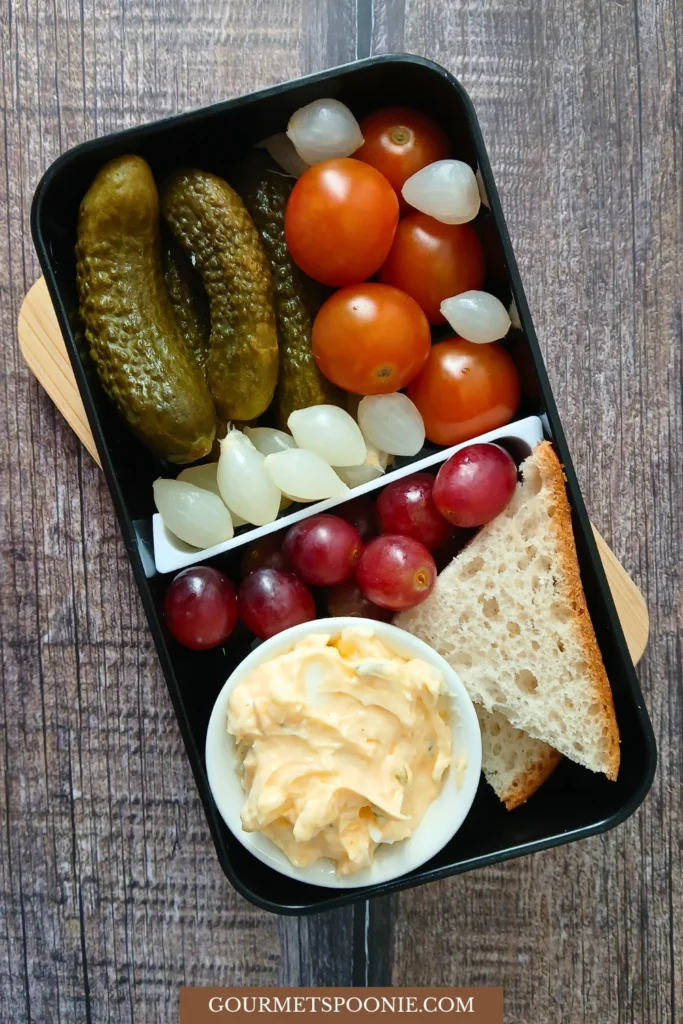
Now that you’ve got the idea, I’m sure you can think of your own variations. All suited to your palate and dietary needs.
How To Store
Store components separately in the fridge and assemble as needed. Most parts will keep well for 2–3 days.
Allergy Information
These healthy lunch boxes are all mix-and-match. Swap components as needed, and always double-check labels for allergens.
Disclaimer
I’m not a dietitian; this recipe and any nutritional or allergy-related notes are based on personal experience and should not replace professional advice.
If you like this recipe, you might also enjoy my Delicious Date Energy Bites, my Easy Vegan Potato Salad Using Fridge Leftovers, or the Spoonie Meal Hack That Works (Almost) Every Time.

Frequently Asked Questions
Healthy Lunchables are built from simple, whole-food components: fruit and veg, a protein source, and a grain or other carb. Think of it as a DIY lunch box where you combine a few easy elements into a balanced, mix-and-match meal.
Absolutely. The original idea is solid, but the execution can be improved. By swapping processed components for whole or minimally processed ingredients, you can create a Lunchables alternative th
The easiest way is to follow a simple healthy lunchbox formula: fill half your lunch box with fruit and veg, add a protein to keep you full, and complete it with a grain or other carb. Following this formula, just pick and choose based on what you’ve got and your energy levels.
Yes, and it actually makes things much easier. You can prep individual components like chopped veg, grains, or proteins in advance, store them separately, and assemble your lunch box when needed.
Want more simple recipes that work on low-energy days?
Sign up for the newsletter and get Spoonie-friendly recipes and kitchen tips straight to your inbox.
Like this Recipe? Pin it!