But I Don’t Feel Disabled: On Disability Identity
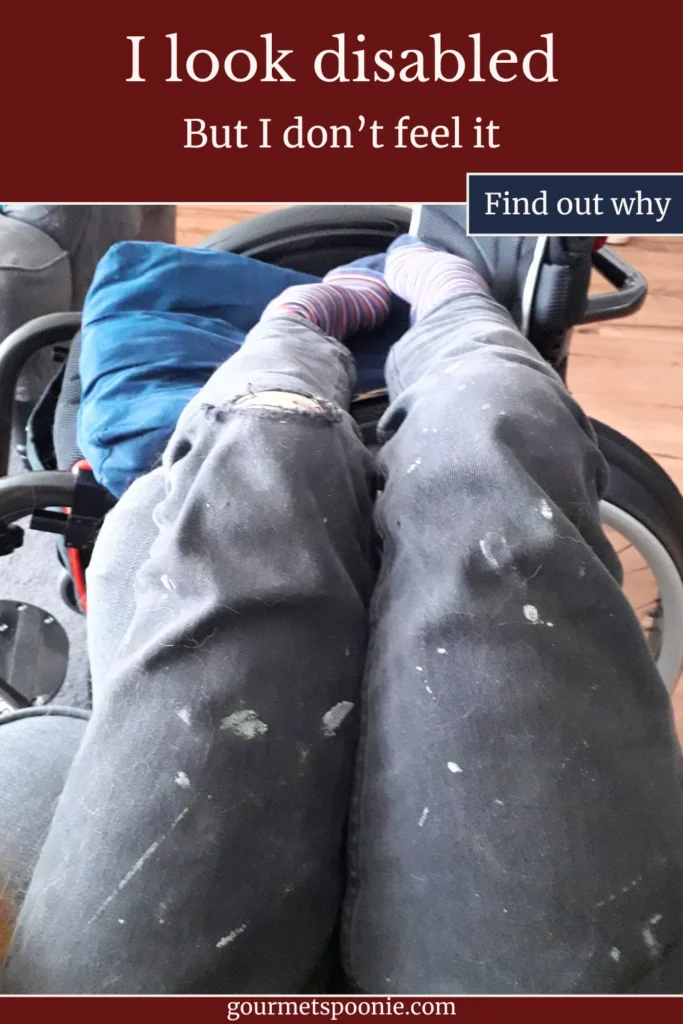
It looks so simple: I’m a wheelchair user, diagnosed with hEDS, autism, and a whole host of related conditions. People only need to see me in my wheelchair to immediately know that I’m disabled.
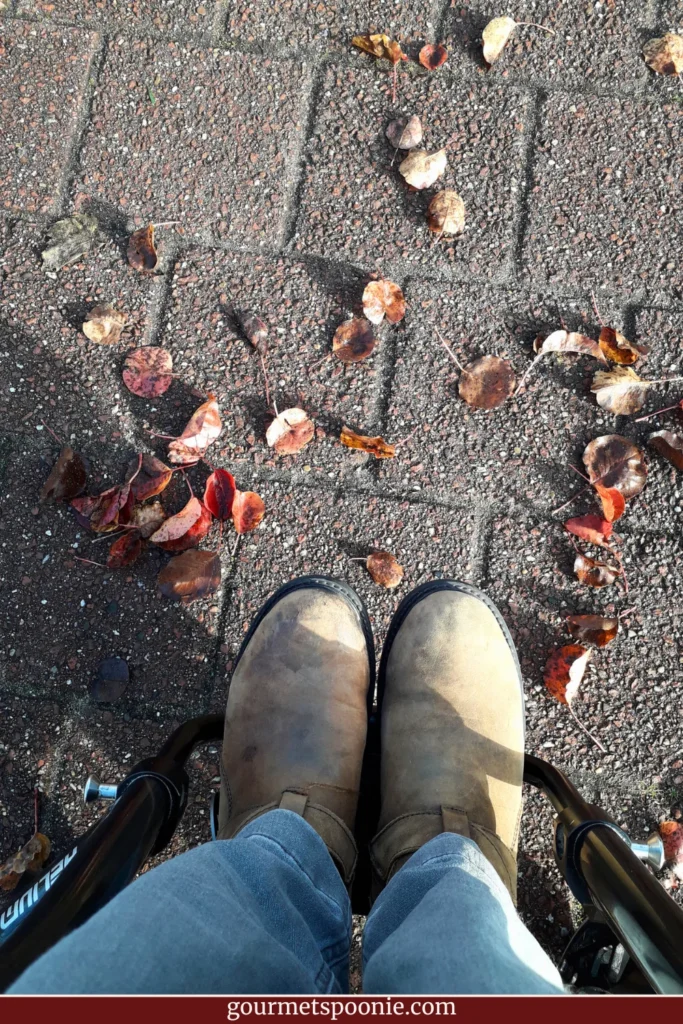
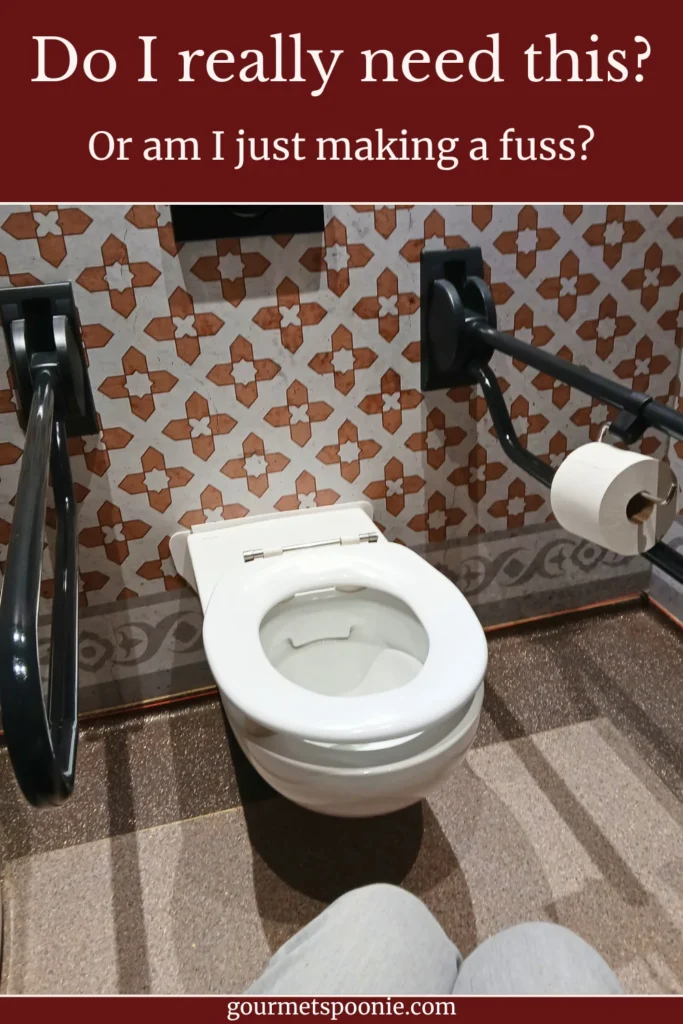
But… I don’t feel disabled, and asking for accommodations often feels disingenuous. As if I’m making a big fuss out of nothing. Disabled toilet? Why on earth would I need that, right?
Disability identity is a fickle thing.
But You Don’t Look Sick
The wheelchair notwithstanding, I truly don’t look sick. I’m thin, but strong and active. I don’t drool, don’t slouch, I speak in full sentences, and wear clothes made for chair riding… just so people will see me as competent and able to care for myself.
The only thing that visibly sets me apart from others is the wheelchair.
Chronic Illness Identity? Who? Me?
Of course, the wheelchair influences how I move through life. I can walk a few steps at a time, but it’s neither pretty, nor painless. It’s typically something I only do inside the house—occasionally.
But the wheelchair doesn’t disable me. If anything, it gave me my freedom back. It allows me to leave the house, shop for groceries, and go places. That’s something I no longer take for granted.
It’s all these other things, though: my food sensitivities, my allergies, the constant pain (usually below my personal awareness-level), the fatigue… But I don’t usually notice the constraints they place upon my life.
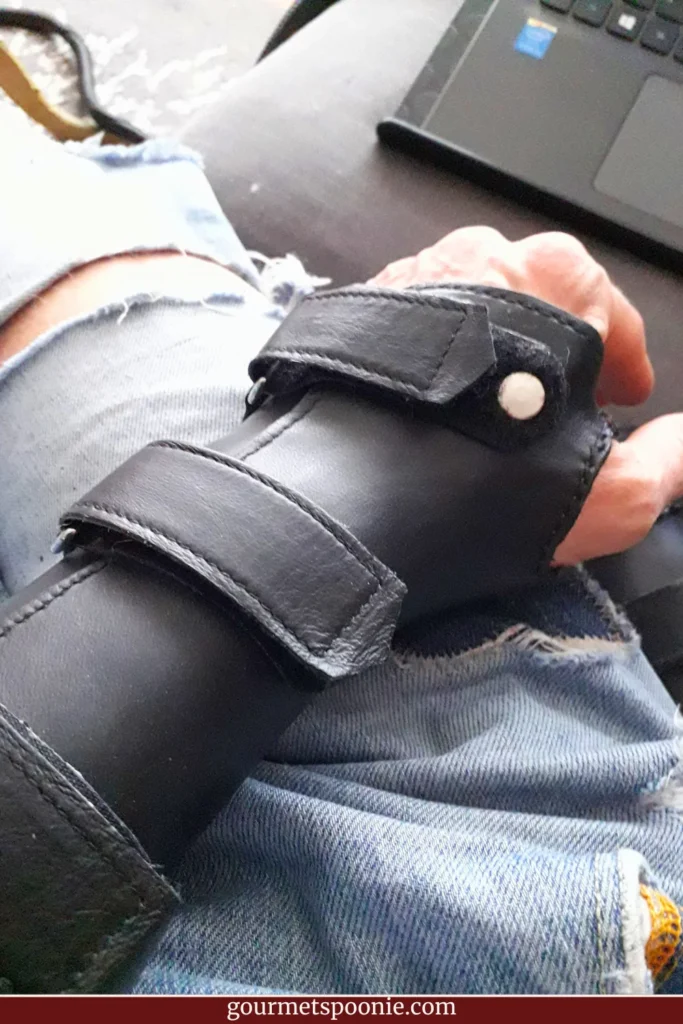
At home, I have my routines in place. Taking care of the cats, preparing food, writing, making music. And even if I don’t always get as much done as I want to, it still feels like I’m in control. Which is partly true.
The food I have in the house is already safe for me to eat. My entire flat is completely wheelchair accessible. There’s no big struggles going on, and life generally feels quite manageable.
Disability Identity in Social Situations
It’s when I leave the safety of the house that things get complicated. Or actually, even before leaving the house.
Because I can’t spontaneously decide to just go out for lunch or dinner. I have to find a suitable place first: one that not just claims to be accessible but then turns out not to have an accessible toilet.
What do they mean I can eat and drink there and then not go to loo? Am I supposed to wear a diaper? Or maybe just pee right in the middle of their posh place?
Then there’s the food restrictions: no gluten, no meat, no raw leaves, no raw carrots (basically, no raw anything), no mustard, no rice, no chia seed… the list is endless. And I feel deeply guilty to be asking for special treatment.
And resentful. That too.
Both of society that still doesn’t treat disabled people as equal, and of my disability that forces me into a role I never signed up for.
It’s not only that I don’t feel disabled but also—and perhaps even more—that I don’t want to be confronted with my disability in ways that leave no room for doubt.
When Disabled Realities Clash
At home, I feel safe and in charge. And while my cats sometimes interfere by stealing my wheelchair—what is it with cats and wheelchairs?—it’s easy to convince them to go elsewhere when I need my chair.
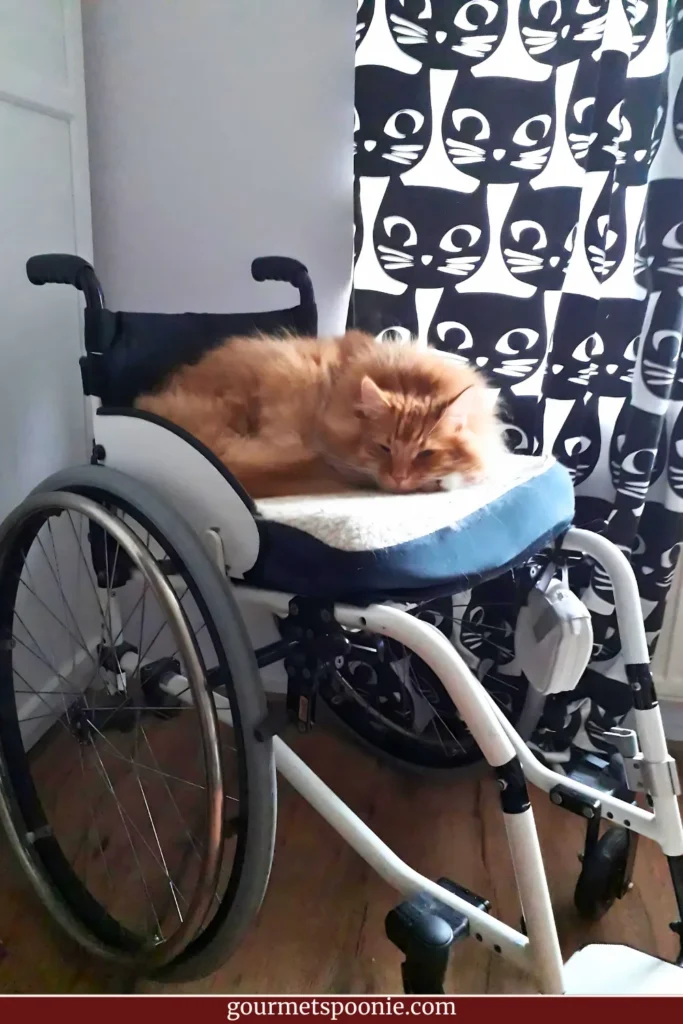
My cats never stare at me. They don’t ask rude or intimate questions. As long as I care for them like any good human should, that’s all they want.
But outside, in the real world, there’s people. And people are notoriously difficult to deal with. They are nosy, noisy, smelly, unpredictable, judgemental… and yes, too often, they judge by appearance alone.
Oh, you’re in a wheelchair? That must mean you can’t handle money and I’ll hand your friend the bill, even though you asked for it. And certainly you’ll want me to pray for you, since you’re in that awful wheelchair. What a sad life that must be! And by the way, can you have sex?
Internalised Ableism at Play
Then there’s those moments where I feel like I’m just a pretender. (Hello internalised ableism!) Because honestly, I could use a non-accessible toilet if I really had to. It would be bothersome, to say the least, but not technically impossible.
Then I have to remind myself: I may not feel disabled, but I really am. I have the right to insist a place has a disabled toilet if I’m going to spend my money there. I don’t have to humiliate myself just because they don’t have the right accommodations in place.
That’s where the real discrepancy lives: inside my own mind.
The Mind on Disability
You don’t have to feel disabled to objectively be disabled. That’s your mind protecting you from a harsh reality. This is necessary to help you cope with everyday life as a chronically ill or disabled person.
Because I don’t know about you, but if I woke up every morning and my first thought was, ‘I’m disabled’… that might just break me.
Frequently Asked Questions
Disability is not a static thing; some days you may feel better than other days. Environment also plays a role. In an environment that’s adapted to your needs, your disability becomes much less obvious.
Chronic illness can have a negative impact on pretty much all aspects of daily life. Pain, fatigue, food intolerances, and allergies (to name a few), can make even the simplest things hard. This can make you feel like there’s nothing left of the person you were before. As if chronic illness has become who you are.
Internalised ableism shows up when you question your needs because you’re applying society’s ableist expectations to yourself. You may catch yourself wondering if you’re ‘disabled enough’ or if you’re just ‘making a fuss over nothing’.
Absolutely. While society often sees mobility aids as limiting, the opposite is true. Mobility aids allow us to have this thing called ‘social life’, whereas without them we might not be able to leave our homes at all.
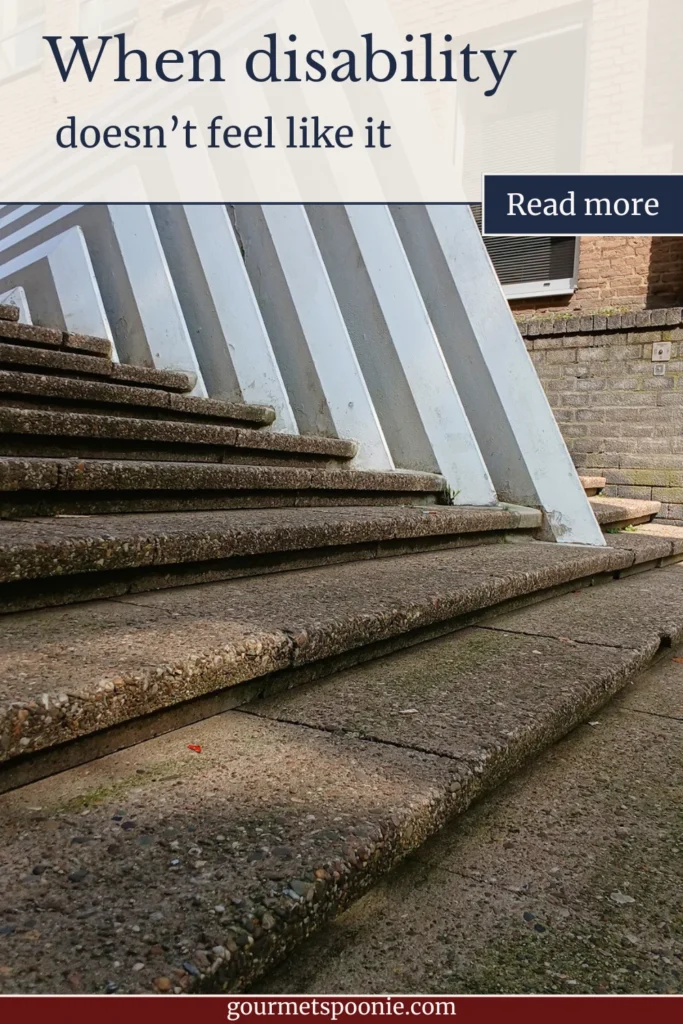
Accessibility is not a one-size-fits-all. What helps people with one disability, might actually make things worse for people with another disability. Also, when non-disabled people design e.g. accessible buildings, they may lack insight in what accessibility truly means. Which could result in an ‘accessible’ toilet with pedal bins and mirrors at standing height…
Sounds familiar?
Sign up for the newsletter and I’ll keep you in the loop.
Enjoyed this Post? Pin it!