My 93m² Spoonie Home: Summer In My Wheelchair Accessible Flat
When I introduced you to my 93m² Spoonie Home, I showed you what my wheelchair accessible flat looks like.
I showed you the different rooms and how I use them throughout the day.
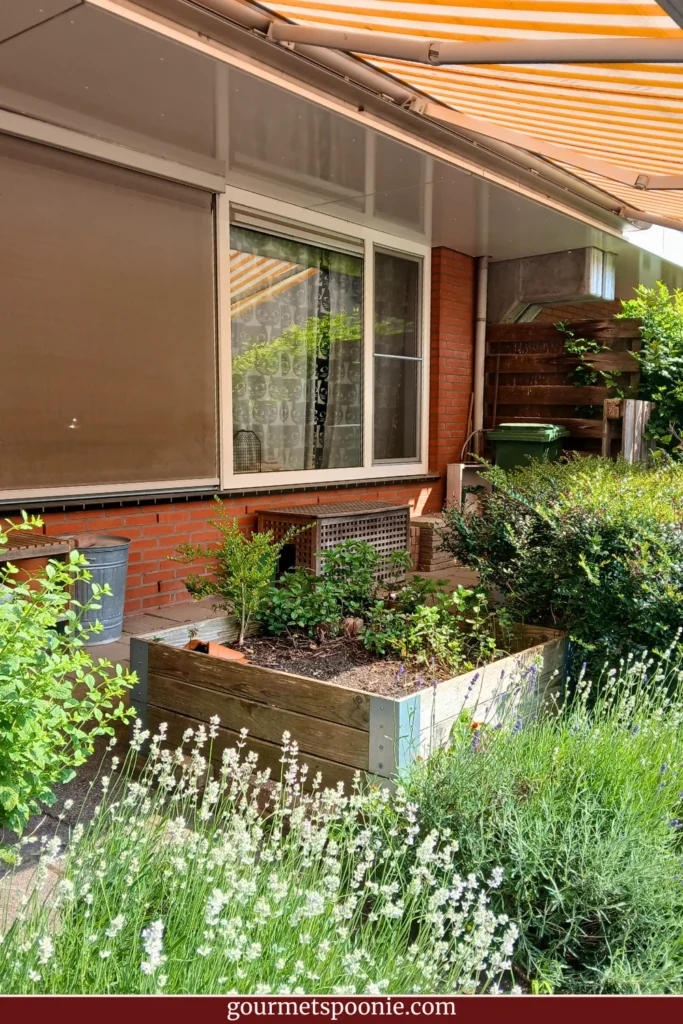
Now, with summer on my doorstep, I’d like to show you how I make sure my home remains a peaceful retreat rather than an accidental sauna.
My 93m² Spoonie Home
Welcome to my 93m² Spoonie Home: a two-bedroom ground-floor flat in the Netherlands. It may be modest, but it’s large enough for me, my three cats, my pianos, and an ever-growing collection of books. With east and west-facing windows, it’s not ideal for growing food indoors, but on the flip side, temperatures hardly ever rise above 25 centigrade during summer. And that’s a definite win.
Summer Heat Management Strategies
Temperatures that barely ever rise about 25°C. Sounds good, right? And it is, but… Yes, there’s always a but. And it’s a big one.
In the Netherlands, air conditioning in private homes is not a given. This means I need to actively manage the indoor environment when outside temperatures rise to well above 30 centigrade (which they did very early on this year: 33°C on May 26, to be precise).
These are my summer heat management strategies to keep the house comfortable throughout summer.
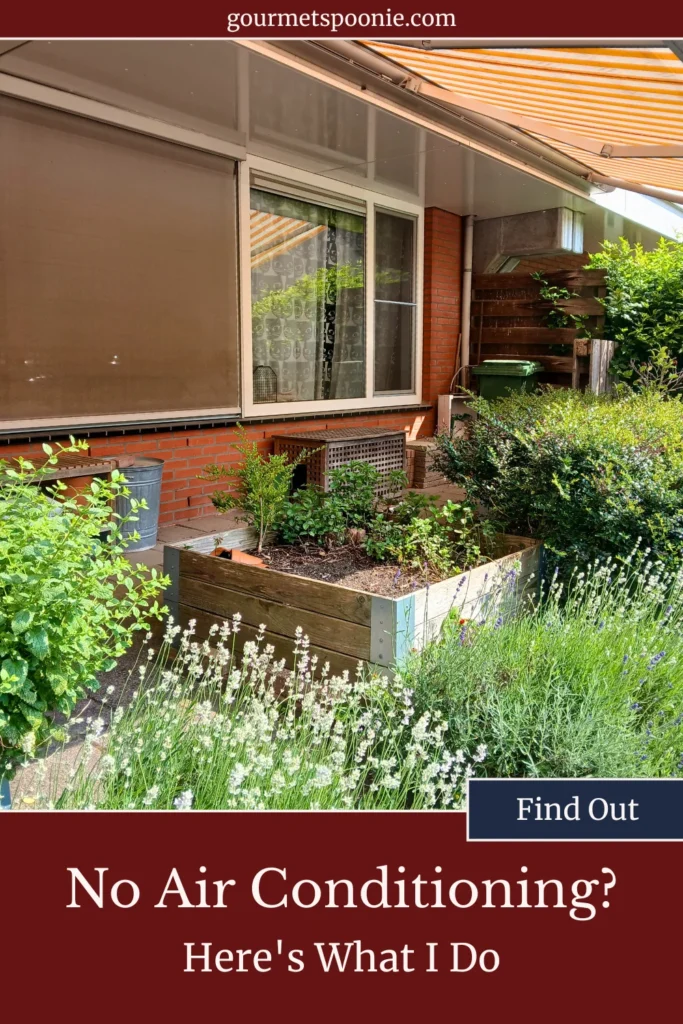
- I keep curtains and windows closed most of the day, and only open them when outside temperatures have dropped below the inside temperature.
- I lower the sunscreen and awning.
- I try to keep my use of appliances to a minimum.
While the first point may sound counterintuitive to some, this really does most of the heavy lifting: it prevents heat from entering the house.
But there’s also the issue of electrical devices. They generate heat. And while each individual one might not produce a lot of heat, when you’ve got two or three computers, a monitor (or two) and other peripherals, a few charging devices, and a fan running… it all adds up.
That’s why I try to limit my use of these devices as much as possible. But clearly, I still need to use my computer. And my phone. These are non-negotiables.
And if you’re wondering about the fan: fans don’t actually cool anything. They redistribute air—and the airflow on your skin can make you feel more comfortable—but ultimately, they generate heat rather than reduce it.
But the biggest culprits here are not fans. Or phones. Or computers. In fact, they don’t even take up any space in my living room. Instead, they live in my kitchen and laundry room. And, while I’m not too bothered by what happens in the laundry room, the kitchen is a different story entirely.
Kitchen Heat Reduction Strategies
Summer in the kitchen is no fun. My kitchen window is east-facing, which means the sun heats up the space before I even enter it to prepare my morning cuppa. And while I keep my window and curtains closed, that’s not enough.
Temperatures rise. This is the room that easily gets hotter than the 25°C I mentioned earlier.
But I still love cooking, so what’s a guy to do?
I have no perfect solutions, but below are the kitchen heat reduction strategies that help me keep things manageable.
I don’t use my oven. No exceptions. Which unfortunately means, no easy vegetable tray bakes, no apple crumbles, and no chickpea cherry brownies.
Instead, I eat a lot of slow cooker meals in summer, and rely on my microwave and bread machine even more often than during the colder seasons.
Bread machine banana bread is just as tasty as the oven-baked version, and slow cooker lentil bread just as hearty and filling.
Slow cooker polenta, all kinds of soup, like e.g. my lentil soup, and even pasta sauce… all of these can be made successfully in the slow cooker.
And besides generating relatively little heat, the slow cooker has another great Spoonie benefit as well: it’s set and forget. Perfect for those hot summer days when I have even less energy than usual.



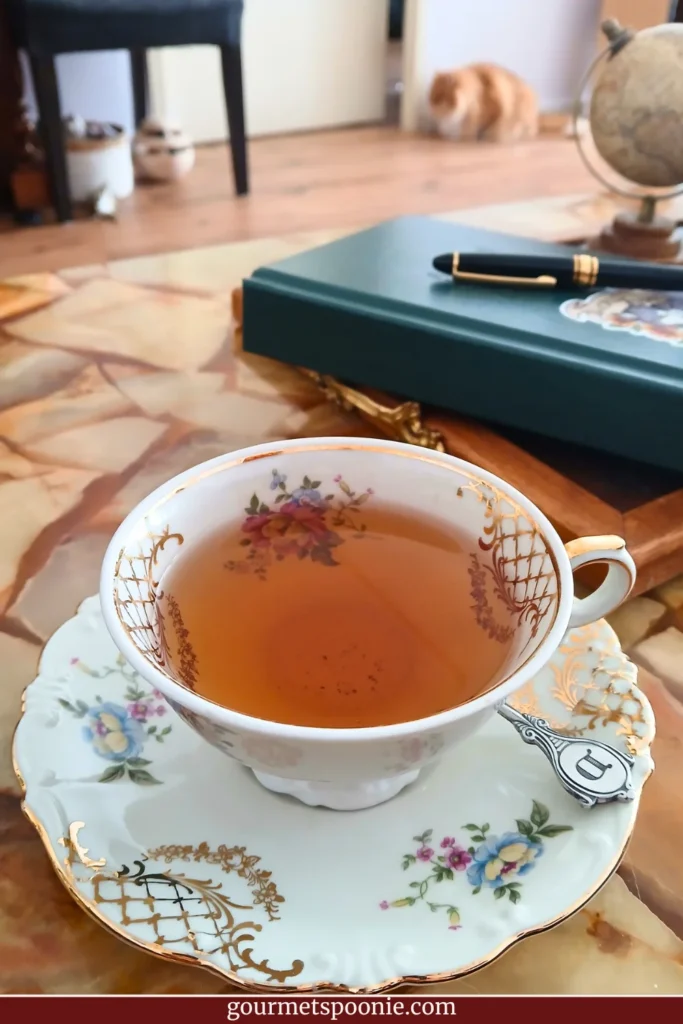
The sun heats up the space before I even enter it to prepare my morning cuppa.
Long Days, Short Nights
That said, one of the biggest changes does not happen inside the house. It’s outside, and it affects my life and my health disproportionately. We’re talking about disrupted sleep from long daylight hours.
At a latitude of 51° 58′ 48.00″ N, my home city gets very long days and very short nights during the summer. And for me, that change is not a good one.
You may have heard of SAD: Seasonal Affective Disorder, where people suffer from major depressive disorder with a seasonal pattern—typically during the winter months.
For me, almost the reverse is true. While I can’t say with any kind of certainty that my lowered mood during the summer months meets the DSM-V criteria for major depression, it is fair to say that I’m not at my best during summer.
The long days and short nights mess with my sleeping pattern, my energy levels, my appetite, and my overall functioning during these long, hot months. Honestly, I well and truly hate summer.
The Annoying Parts of Summer
But I don’t only hate summer because it’s hot and messes with my mental and physical wellbeing. Nope. There’s more to it.
Screen glare in bright sunlight
So annoying. Imagine working on an article and screen glare making it impossible to even see your own writing. Sure, I can blind-type. Learnt that half a lifetime ago, and it keeps paying dividend. But just because I can, doesn’t mean I never make mistakes. Typos happen. And I prefer to catch them before they get published online.
Pollen allergies in summer months
Honestly, pollen tend to make my life miserable most of the year, starting with tree pollen as early as January, followed by weeds and grasses in spring and summer through to late autumn. However, summer is definitely worst for pollen.
Aren’t allergies a lot of fun?
Environmental triggers in summer
Then there’s the unbridled growth of non-human life forms in my post stamp-sized garden. Not just plants. I mean creepy crawlies, AKA as insects. It might not be very manly, but those things make my skin… well, crawl.
OK, I’ll make an exception for bees and butterflies. But that’s about as far as I’ll go.
My Home is Still My Castle
Yet, despite the fact that the universe itself seems to conspire against me during summer, not all is dread and despair. Some things remain the same, no matter the season. It’s that sameness that keeps me grounded.
- My flat is still just as wheelchair-accessible.
- The floor plan doesn’t magically change.
- I don’t feel any urge to bring out seasonal decorations.
- My pianos are still where they always are.
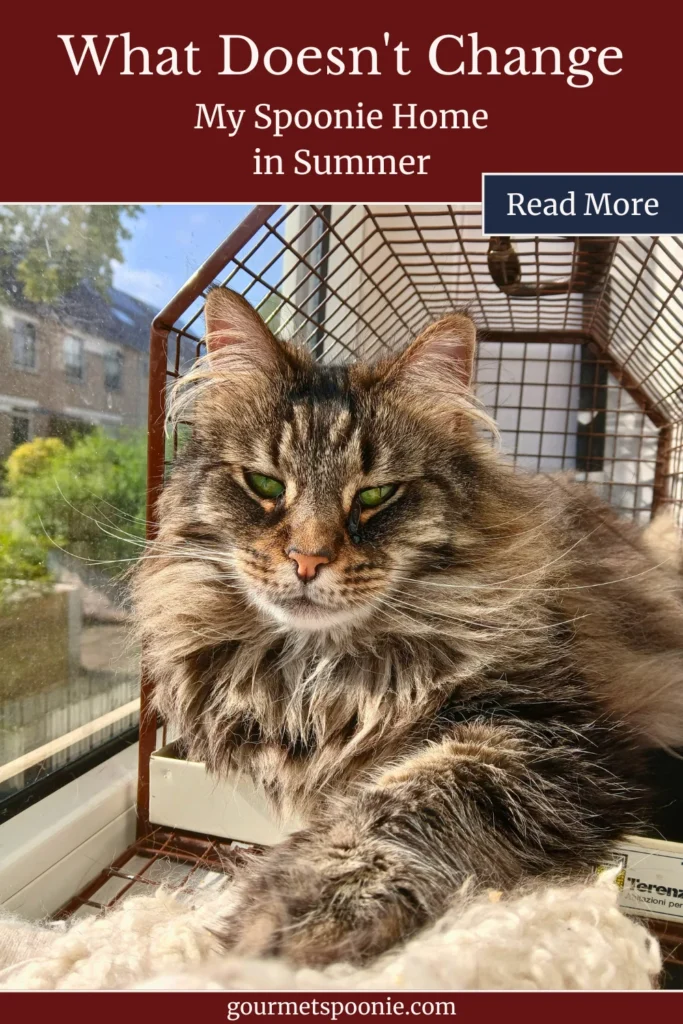
Most importantly, my cats are still there for me. Sometimes amusing, sometimes annoying, but always affectionate. My little diva Thalia, soft and gentle Rafaela, and charming and incorrigible Mozart.
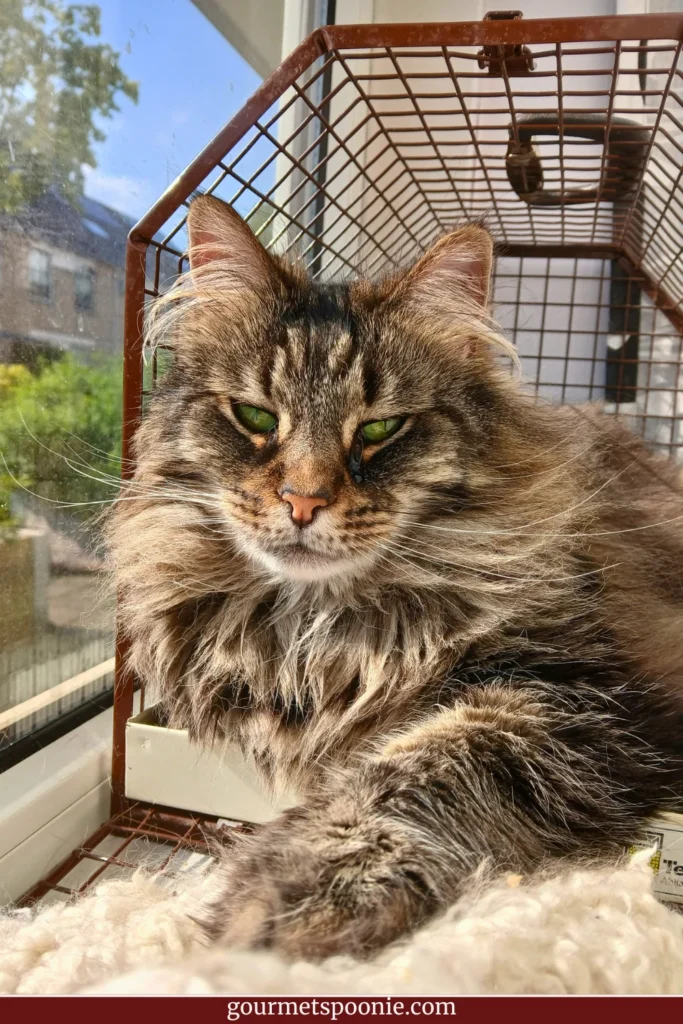
These three never fail to lift my mood. Even if only briefly.
If you like this post, you might also enjoy my post on Accessible Home Library Design, or my Wheelchair-Accessible DIY Project Update.
Frequently Asked Questions About Summer in My Wheelchair Accessible Flat
My daily routines stay largely the same, but I make adjustments to manage indoor temperature: closing curtains and windows during the day, using awnings, and reducing heat-generating activities where possible.
Keeping indoor temperatures cool without air condition is all about preventing heat from entering in the house. I keep windows and curtains closed when it’s hot outside, and only open them when outdoor temperatures drop below indoor levels.
The oven generates a lot of heat, which raises indoor temperatures quickly in my small kitchen. That’s why I rely more on my slow cooker, microwave, and bread machine, which don’t generate as my heat.
Yes. The long daylight hours in the Netherlands have a significant effect on my sleep. This, in turn, influences my energy levels, appetite, and overall wellbeing.
The accessibility of the flat remains the same, no matter the season. However, the heat, long daylight hours, and seasonal sensory issues, force me to make adjustments in how i use my flat.
Want ideas to help you create your perfect Spoonie home?
Sign up for the newsletter and get Spoonie-friendly design ideas straight to your inbox.
Enjoyed this post? Pin it!