Delicious Dutch Kale Mash
(Boerenkoolstamppot)
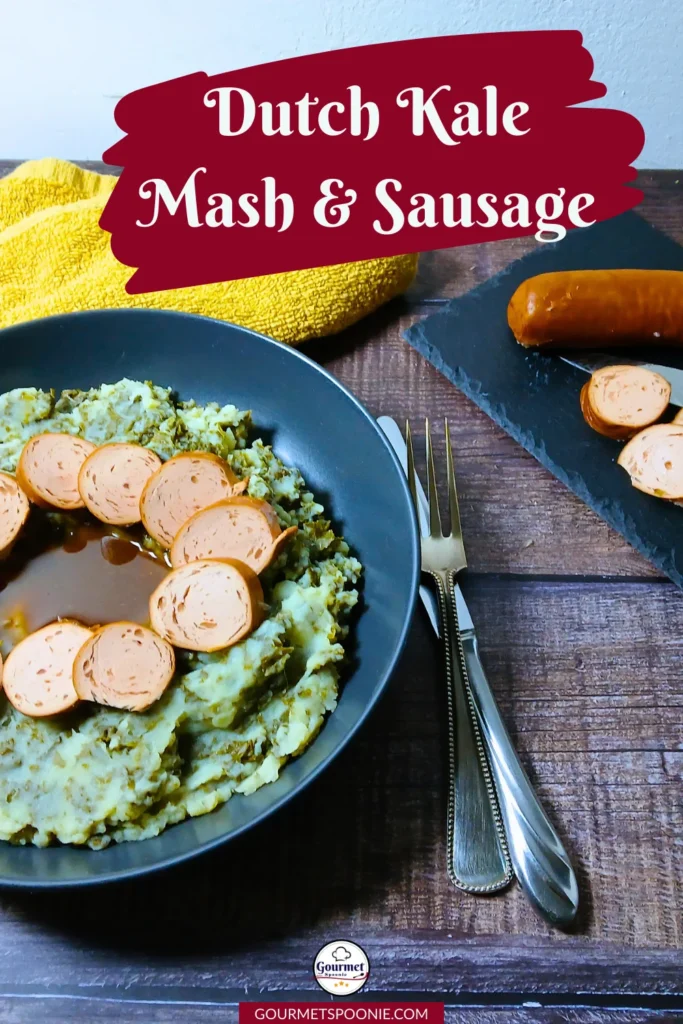
While I’m not the greatest fan of the Dutch cuisine, I won’t deny it: I love a hearty boerenkoolstamppot. Yes, that’s one word, which loosely translates as Kale Mash. Dutch Kale Mash is easily one of my favourite dishes. So easy, tasty, and nourishing. It’s my number one winter comfort food.
The real Dutch boerenkoolstamppot
If you google ‘boerenkoolstamppot’ you’ll find oodles of recipes. All of them claiming to be the authentic recipe, when in reality… well, some are. Others (like the ones featuring onions, or worse: those with sweet pear halves topping the mash) definitely aren’t.
Then there’s the ones suggesting you serve it with bitterballen (fried balls of beef or veal ragoût), huzarensalade (basically a potato salad), or appeltaart (Dutch apple pie)—and I’m just staring at the words, unable to believe my eyes. What are these people thinking?
And let’s not even get started on the people confusing stamppot with hutspot (which is a specific kind of stamppot, made with carrots and onions).
What really goes into traditional Dutch kale mash
The Dutch cuisine is a simple, no-nonsense one. We use plain ingredients, and usually not a whole bunch of different ones either.
The two main ingredients or boerenkoolstamppot are potatoes and boerenkool, which literally means: farmers cabbage, but the English-speaking world knows it as curly kale. Both potatoes and curly kale are well suited to our Dutch climate, and kale actually tastes even better after at least one night of frost before being harvested. It takes some of the bitterness off the kale.
The third very important ingredient is Dutch rookworst (smoked sausage), which may not be readily available abroad, but not to worry: just replace it with your favourite smoked sausage. It will be different, but still good.
The only other ingredients are water, milk, and salt and pepper to taste. Some people might add a little bacon, but back when I was a child, my mum certainly didn’t.
Vegan and vegetarian variations
If you’re eating a plant-based diet, you don’t have to miss out. Plant-based milk and vegan sausage are just as good as their animal-based counterparts.
To be completely honest with you: I’ve always been partial to the iconic HEMA rookworst, and have been known to ‘sin’ against my vegetarian diet on occasion, because the smell alone made me lose all restraint. But no more! Now they’ve got this vegan rookworst, which also happens to be gluten-free—and it’s just as delicious.
Dutch kale mash, a deliciously easy dinner
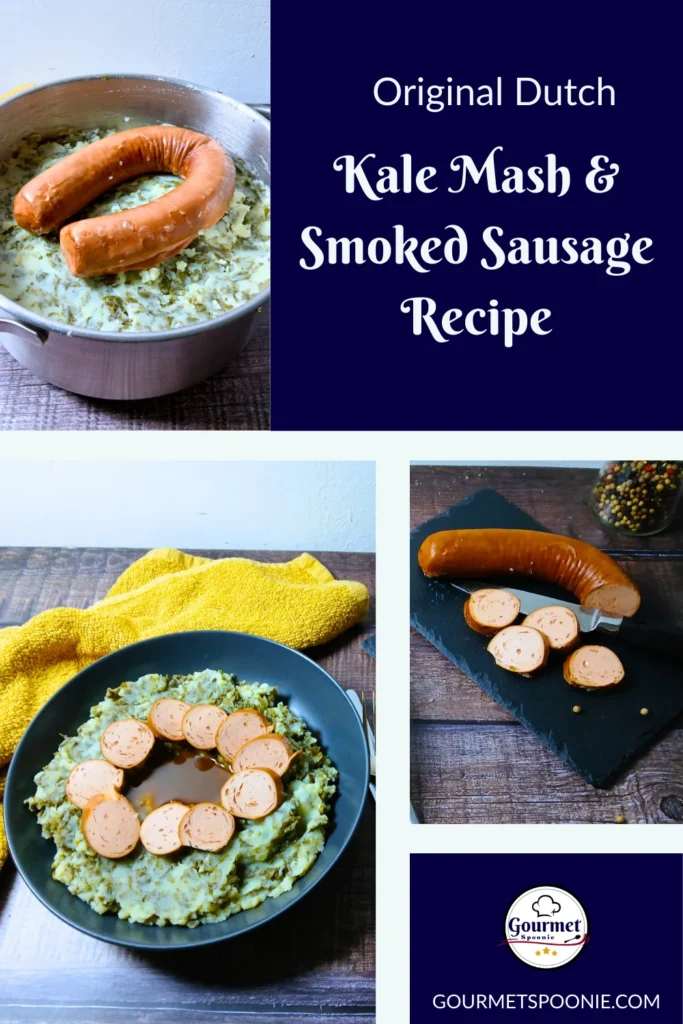
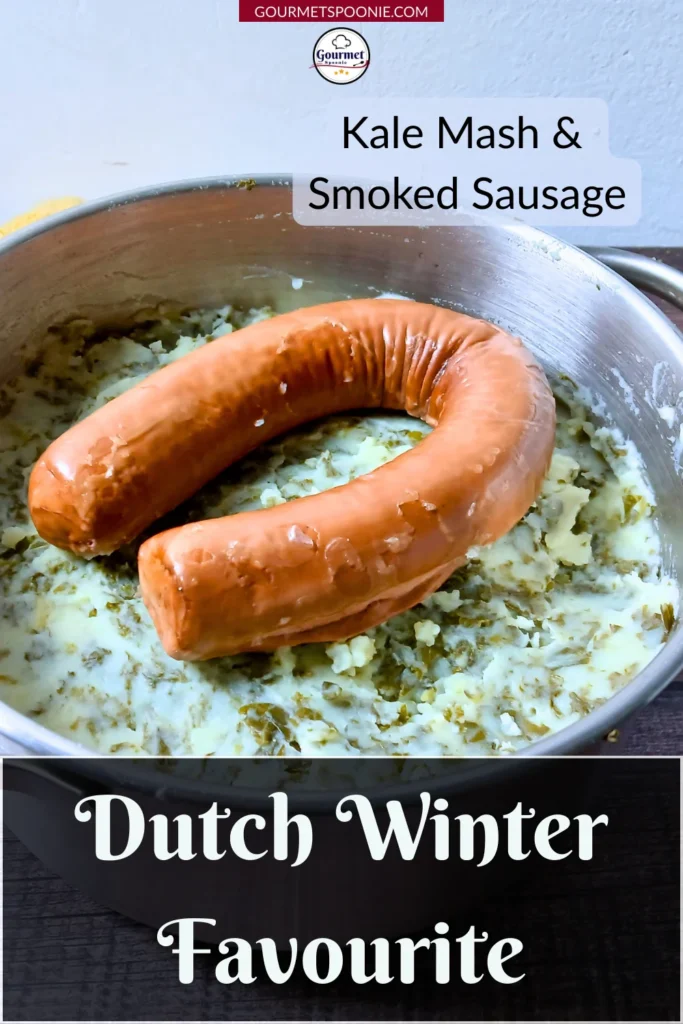
When I say boerenkoolstamppot is about the easiest Dutch dish ever, I’m not lying. You simply dump potatoes, kale, and water in a pot, place your sausage on top, and let the hob do its job.
Once the potatoes are fork-tender, you take out the rookworst and lay it aside, drain excess water, and mash your kale and potatoes. Add water or (non-dairy) milk as needed, and a knob of butter or some (vegan) cream cheese for a creamier result.
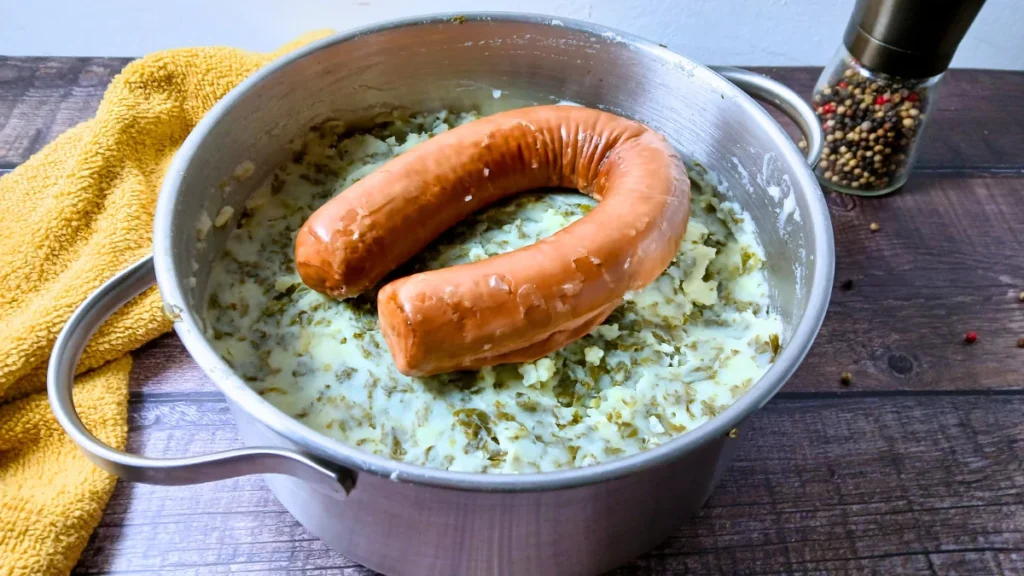
Then serve with rookworst.
Takes all of 30 minutes from start to finish (if you use pre-washed and cut potatoes and kale).
Spoonie Notes
- Use pre-washed and cut potatoes and kale
- Keep in mind that rookworst contains a lot of sodium and unhealhty fat. If needed, swap the rookworst for a healthier alternative. Smoked tofu, green lentils, or brown beans would work well.
- Cook double the amount of what you need, and store leftovers in the fridge or freezer. I do this all the time: cook once, eat twice.
Storage
Store in an airtight container in the fridge for up to 5 days, or in the freezer for up to 3 months. Reheat in microwave or on the hob.
Allergy Information
- Free from: dairy, gluten, eggs, nuts, soy, sesame
- Always check labels for allergens
Recipe Card

Delicious Dutch Kale Mash (Boerenkoolstamppot)
Equipment
- 1 large pot with lid
- 1 potato masher
Ingredients
- 800 g potatoes peeled and quartered
- 500 g curly kale pre-washed and cut
- Water or non-dairy milk
- Vegan cream cheese optional
- Salt and pepper to taste
- 1 Dutch vegan rookworst or other vegan sausage
Instructions
- Place 800 g potatoes, 500 g curly kale, in a pot, cover with water, and place 1 Dutch vegan rookworst top, and cover with a lid.
- Bring to a boil.
- Lower heat and allow to simmer for 20-25 minutes, until potatoes are fork-tender.
- Take out the 1 Dutch vegan rookworstookworst and lay it aside.
- Drain excess water, and mash your kale and potatoes.
- Add Water or non-dairy milk as needed, and a knob of butter or some Vegan cream cheese for a creamier result.
- Add Salt and pepper to taste.
- Serve with rookworst.
This post is part of the mini series The Gentle Art of Winter Cooking, a celebration of spoonie-friendly, easy, and nourishing dishes that provide warmth and comfort on cold days.
Like this Recipe? Pin it!