The L-shaped Knife Myth Busted
How a well-meaning kitchen tool turned into a pain in the arm
It seemed such a great idea: an angled knife to reduce strain on the wrist. My EDS-friends were raving about it, so I, newly diagnosed with Hypermobile Ehlers-Danlos Syndrome, got myself one of these wonders of adaptive design—only to end up disappointed.
Not only did my L-shaped knife not live up to my expectations, but it actively caused more trouble for me than any other kitchen knife had ever done.
But before we dive into this any further: What is an angled or L-shaped knife?
An angled knife is a kitchen knife with the handle set at a 90-degree angle to the blade. It’s designed to keep the wrist straight and let you cut with a downward motion instead of a traditional slicing grip.
Let’s have a closer look, shall we?
The Promise: What the Angled Knife Is Supposed to Do
As we just saw, the whole point of the L-shaped knife is to reduce wrist strain. And yes, the knife does, indeed, live up to that promise.
But that doesn’t mean it actually works well.
While it does keep the wrist in a neutral position, it does so at a cost: it redistributes the pressure to the elbow and shoulder. And that is an awful tradeoff for a large group of the people towards whom it is marketed: people with EDS or other conditions that cause joint instability.
This might not be too much of an issue for people with arthritis, carpal tunnel syndrome, or weak grip due to other conditions than hypermobility, but I can’t say for sure. I’m no expert there; just a guy who happens to have EDS.
But let’s have a look at how the L-shaped knife works in practice, because theory only gets a person so far.
Reality Check: What Happens in Real Kitchens
So, I got this brand-new angled knife and was eager to try it out. What disabled chef wouldn’t?
After lamenting the hideous design (why does ugliness seem to be a standard feature of adaptive design?), I got out my chopping board, some veggies and got down to work.
Honestly, the first thing I noticed was not any reduced stress on my wrist. And get this: at the time I had a ganglion cyst on my wrist that hurt like crazy with even the tiniest movement. I couldn’t even turn a key without being in agony.
But no, the first thing I noticed was how awkward the thing felt in my hand. How I lacked any fine motor control. That worried me. How could such a lack of precision possibly be safe?
We’re talking knives here! Those things should be safe to use. This one did not pass the test.
The next thing I noticed was how much stress using this L-shaped knife put on my elbow and shoulder. And with a shoulder that subluxes at the drop of a hat, that’s not a good thing.
That’s when it hit me: Instead of that sharp pain in my wrist, I now had both a painful elbow and subluxed shoulder. Great.
I did the only thing any sensible person would do: I threw the crappy adaptive device out.
And yet… why did my EDS friends love these L-shaped knives so much?
But What About Other’s Experiences?
For years I thought it was just me. Well, me and my son and daughter—both also diagnosed with EDS, and neither of them fans of these adaptive knives.
But then I saw this reel on Chronically Jenni’s Instagram where she raves about the L-shaped knife. She also shows it in this YouTube video, where she discusses several kitchen hacks she swears by:
What immediately stands out to me in this video is that the knife doesn’t even take the pressure off her wrist. But then that’s not why she’s using it. She loves it because it prevents her fingers from bending out of shape.
While that’s a valid point, I can’t help but notice the knife significantly reduces her fine motor control, too. Just like it did mine. What I see is slightly awkward movements, esp for someone who has years of practice using this ergonomic knife.
Also, she shows how the L-shaped knife works on a spring onion, which is extremely easy to cut. That’s rather different from cutting a turnip or swede, or even a yellow onion, just to name a few.
How Accessibility Gets Lost in Translation
What goes wrong here? Is it a matter of false promises? Marketing to the wrong people? Miscommunication? Flawed design?
All of these? Let’s have a closer look.
When Design Theory Meets Real Bodies
We’ve seen that while the theory seems solid, lived experience suggests it’s not nearly as clear-cut as that. And honestly, that’s not surprising.
Disability comes in many shapes and forms. And even within a single health condition (and within the same family), symptoms can vary widely—as is certainly the case with hEDS/HSD.
To think one adaptive device would suit everyone with a certain disability would be a mistake. Going back to my own disability, EDS…
Some people with EDS need a motorised wheelchair, whereas others can walk without needing any mobility aid. Some are more hypermobile than others. Some experience more and higher levels of pain and/or fatigue than others. And so on and so forth.
Different Bodies, Different Needs
The L-shaped knife might work wonders for some, and be a huge pain in the arse for others—even if they have the same health condition.
So, if Jenni says the L-shaped knife is one of her favourite kitchen tools, I believe her. She knows her own body best. Simple as that.
Yet, we cannot and should not assume that her experience means this is The Best Knife for everyone with EDS. Because clearly, it isn’t. My own experience proves that.
This is something I think many healthcare professionals overlook. When an occupational therapist looks at a diagnosis and bases their advice on that alone, things can and do go horrible wrong.
People end up with the wrong mobility aids, the wrong adaptive devices and wrong techniques for managing their disability, simply because the therapist failed to look at the person behind the diagnosis.
Here’s an important takeaway for healthcare professionals: look at the person first and the diagnosis second. Never the other way round.
What Actually Works (For Me)
Now that we’ve established that the angled knife is not The Perfect Solution for every disabled person, let’s have a look at other options.
When limited energy or joint pain narrow your options, a sharp chef’s knife or a reliable food processor can make an enormous difference. For more ways to save energy or minimise pain in the kitchen, check out Meal Prepping Without the Pressure or my 5-Minute Meals: Healthy Food Fast guide.
Here’s what works well for me:
A Good Chef’s Knife and Proper Knife Skills.
I know, it almost sounds too easy, doesn’t it? Just a good chef’s knife and proper knife skills. How can that possibly help me with my EDS, especially knowing that my fingerjoints are extremely unstable, and I cannot even write with an ordinary pen without dislocating a digit?
Here’s the secret: You can’t just use any kitchen knife. That cheapo knife you bought at your local supermarket? The only good part about it is likely the price.
A good chef’s knife is sharp and balanced—and quality doesn’t come cheap. That’s not to say your chef’s knife has to cost you an arm and a leg.
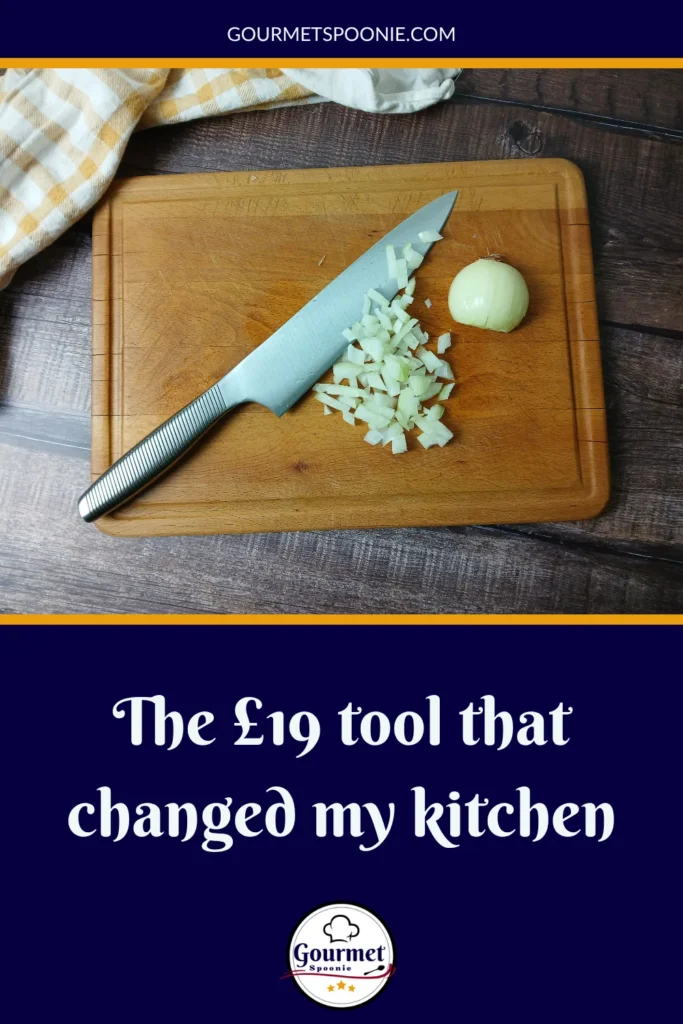
I’ve got an Ikea 365+ chef’s knife that’s far better than its modest price tag suggests. It has everything a basic chef’s knife needs: it’s sharp, properly weighted, and even comes with a non-slip grip. The design, while not extraordinary, is pleasing enough, too.
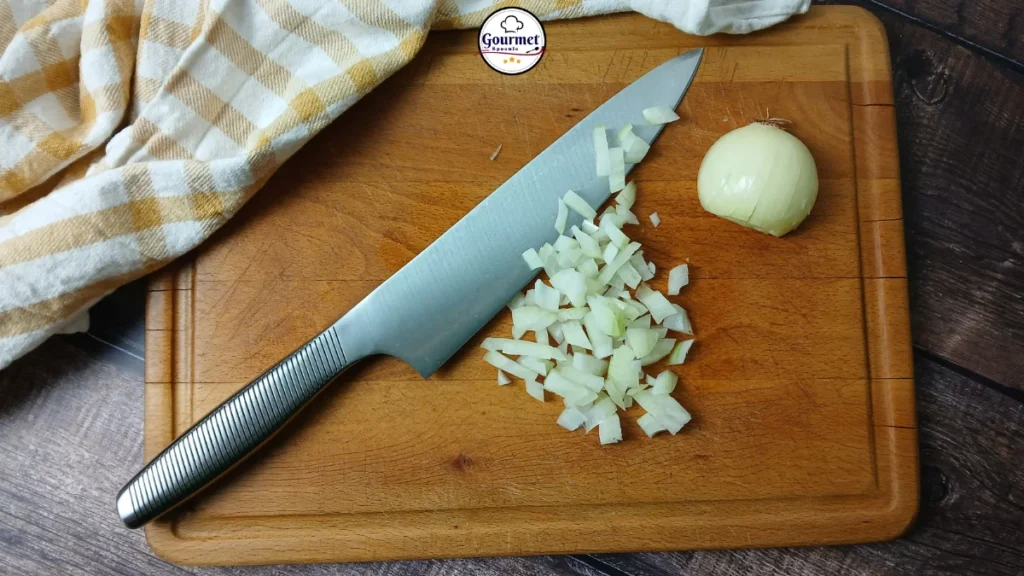
It will only set you back £19. Quite a steal, if you ask me.
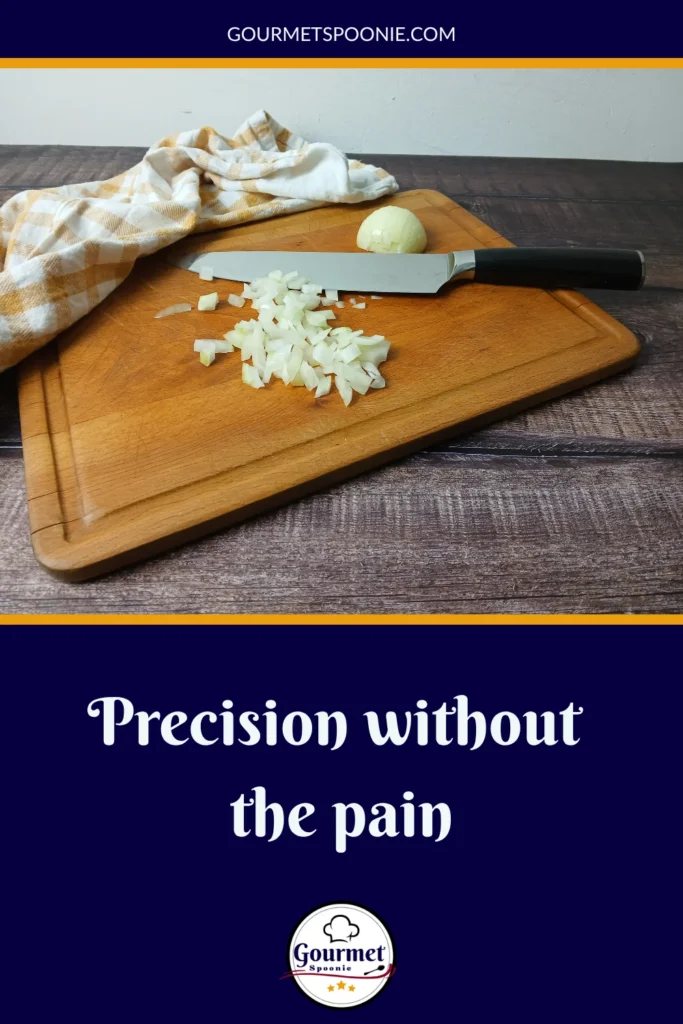
I’ve also got a Japanese knife of the Dutch brand Master Knives: made of carbon steel, forged in the Damascus style, combining both beauty and function. Not only is it exceptionally sharp, strong, lightweight and versatile, but its layered pattern is a joy to look at.
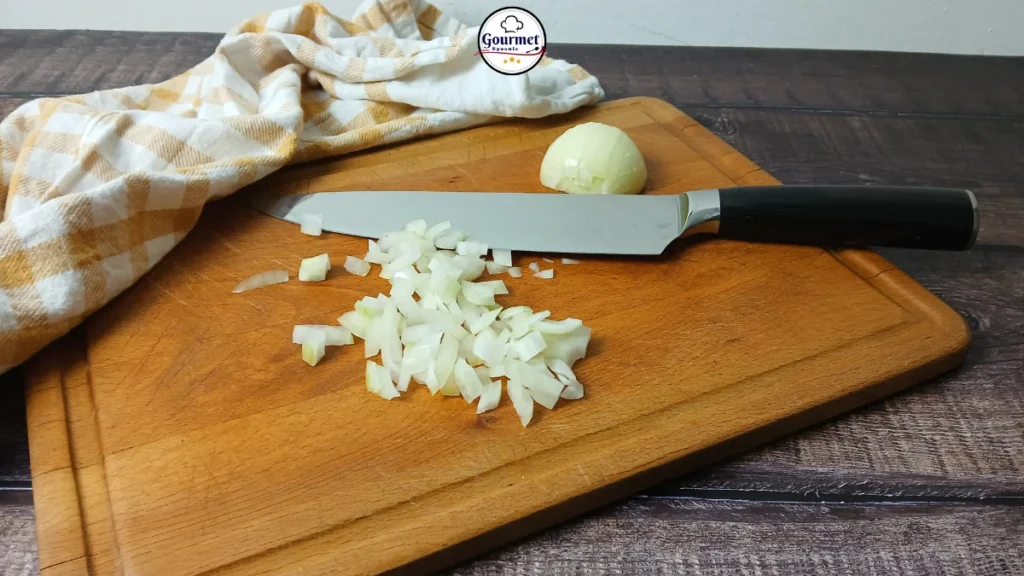
That said, my Japanese chef’s knife was quite a bit pricier than my Ikea 365+, and it needs some extra care: washing it in the dishwasher would utterly ruin it. It would go rusty in no time flat and lose its edge, so I handwash it immediately after each use and dry it very carefully.
The Ikea 365+, on the other hand, is dishwasher safe. I still wouldn’t recommend washing it in the dishwasher, as this will shorten your knife’s lifespan, but if handwashing your knife is a problem, putting it in the dishwasher is definitely an option.
Proper Knife Skills Are Essential
While a sharp, quality chef’s knife is half the battle won, it might just get you in A&E if you lack the skills to use your knife safely.
I’d love to personally show you how to develop good knife skills, but as a Spoonie, it take far too much energy for me to actually make a video, so I found you a YouTuber video where a restaurant chef shows you exactly how to hold and use your knife safely—and he demonstrates no fewer than eight essential techniques.
But what if you absolutely cannot use a chef’s knife and the L-shaped knife doesn’t work out for you either?
The Benefits Of a Food Processor
On days when cooking feels impossible, a food processor can do the heavy lifting for you. For other zero-effort options, read my Spoonie Survival Guide: Zero-Prep Food and Drink for Hard Days or Quick Emergency Meals for Spoonies.
And don’t be deluded into thinking you need the newest, highest powered food processor. A cheap simple one can do most of the heavy lifting for you. Safely and easily.
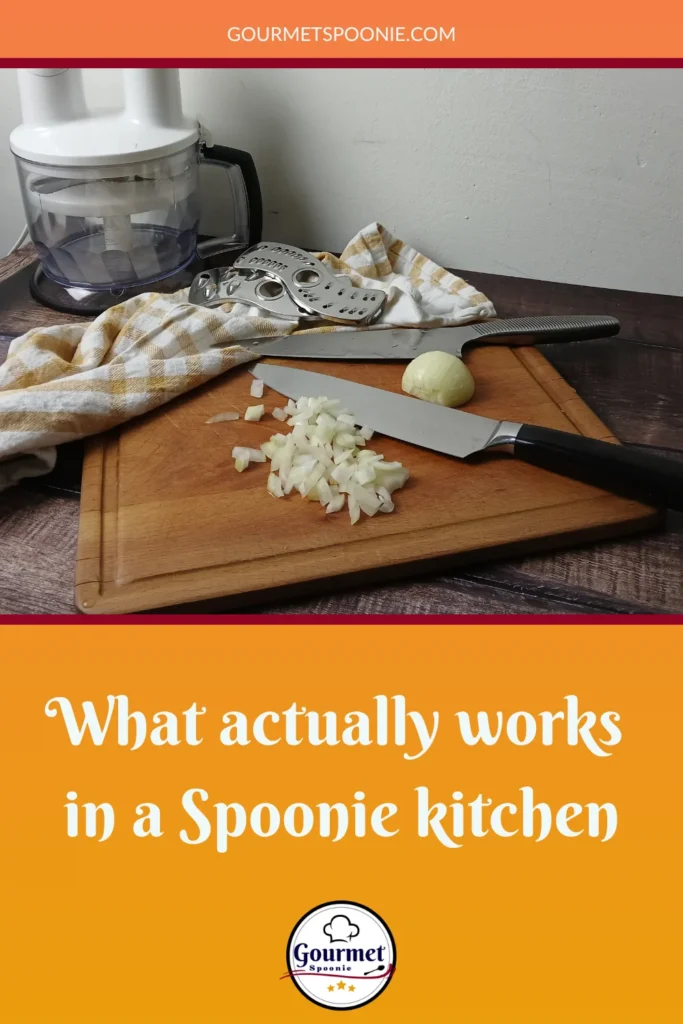
I have a 700W Braun immersion blender with large bowl and slicers, herb chopper attachments, and it works like a charm. It’s so sturdy, it actually even handles frozen fruit straight from the freezer without complaint.
I often use it when I just don’t have the energy to do my chopping manually. Onions, carrots, courgettes, potatoes, other veg… It just makes a real mess of leeks, but those are easy to cut by hand, anyway.
The L-shaped Knife: Useful Adaptive Tool or Worthless Gimmick?
The question whether the L-shaped knife is a great kitchen hack for disabled people or just another over-hyped gimmick has no cut-and-dry answer.
The reality is complex: for some disabled people it is, indeed, a godsend, whereas for others it’s a dangerous gadget and a waste of money.
Adaptive tools and smart kitchen setup help, but sometimes it’s just about working smarter, not harder. My posts Easy Kitchen Cleaning Tips for Spoonies and Meal Prepping Without the Pressure show other ways to make your kitchen more manageable.
In the end, which adaptive designs a person might need really depends on their level of disability and how their disability presents itself. A good occupational therapist will base their recommendations on a holistic assessment of who their client is and what they can and cannot do.
Disclaimer:
This post is based on my personal experiences and opinions as a disabled cook. It is intended for general informational and educational purposes only. It is not medical advice, and should not be relied upon as a substitute for professional guidance from a qualified healthcare provider, occupational therapist, or medical professional.
Like this post? Pin it!